The complete guide
Balance Bikes for Toddlers: How to Choose the Right First Bike
The problem with training wheels
Most of us learned to ride on a small bike with two little wheels bolted to the back. It worked, eventually, but it taught the wrong thing first. Training wheels let a child pedal without ever balancing. The bike leans onto one stabiliser, the child learns to steer around that lean, and then one day the wheels come off and none of it transfers. Cue the running-behind-holding-the-seat phase, the scraped knee and the bike in the shed.
A balance bike flips the order. It removes pedals entirely so the only thing left to learn is the hard bit: staying upright and pointing where you want to go. A toddler sits down, walks the bike along with their feet, and at some point discovers they can lift both feet and keep rolling. That discovery is the whole product. Everything else is just making it comfortable enough that they want to keep trying.
How a baby balance bike actually works
There is no drivetrain to speak of. The child is the engine. Their feet push off the ground, the bike rolls, and when they want to stop they put their feet down. Because there is no pedal crank in the way, their legs can always reach the floor, which is exactly why this works for children who are barely out of nappies.
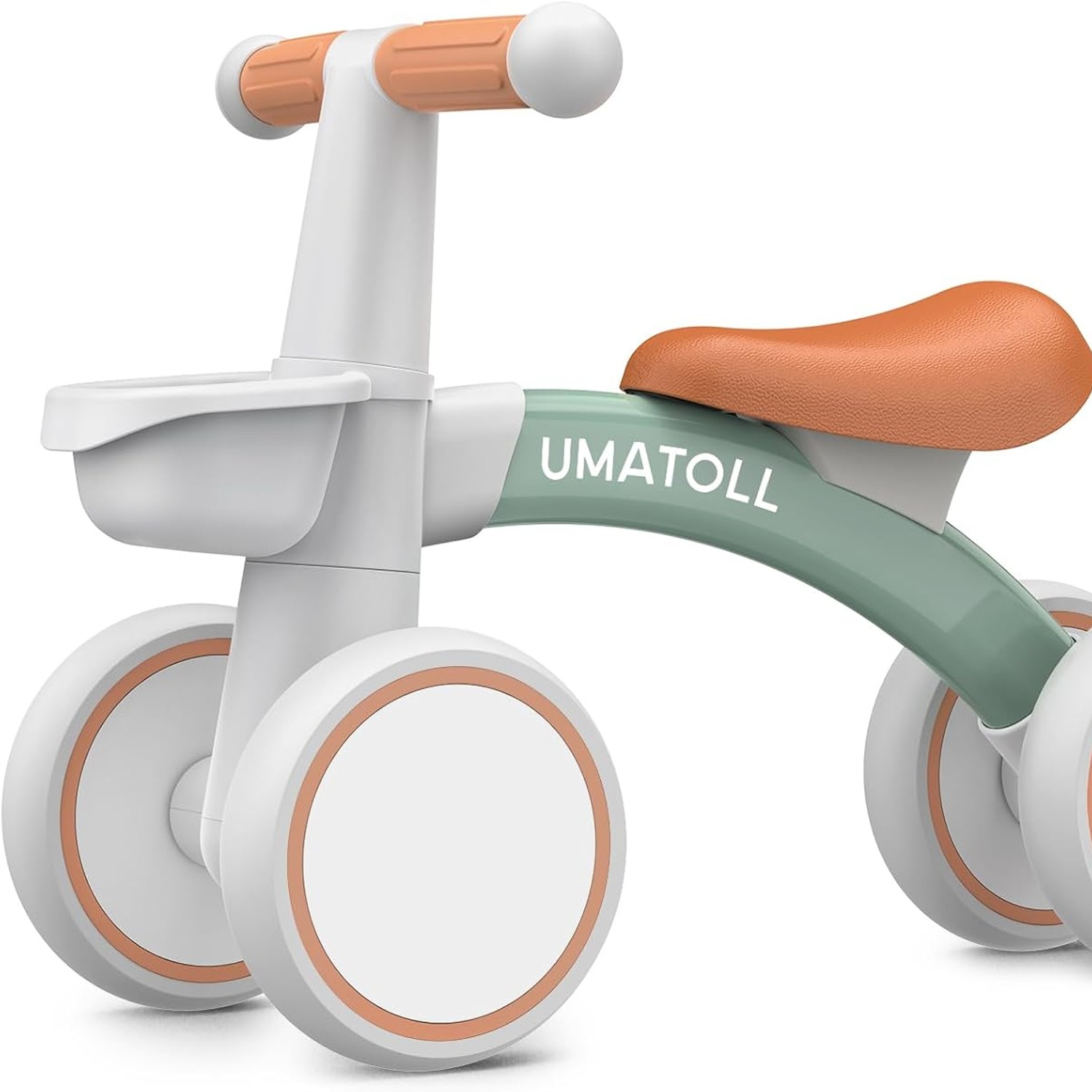
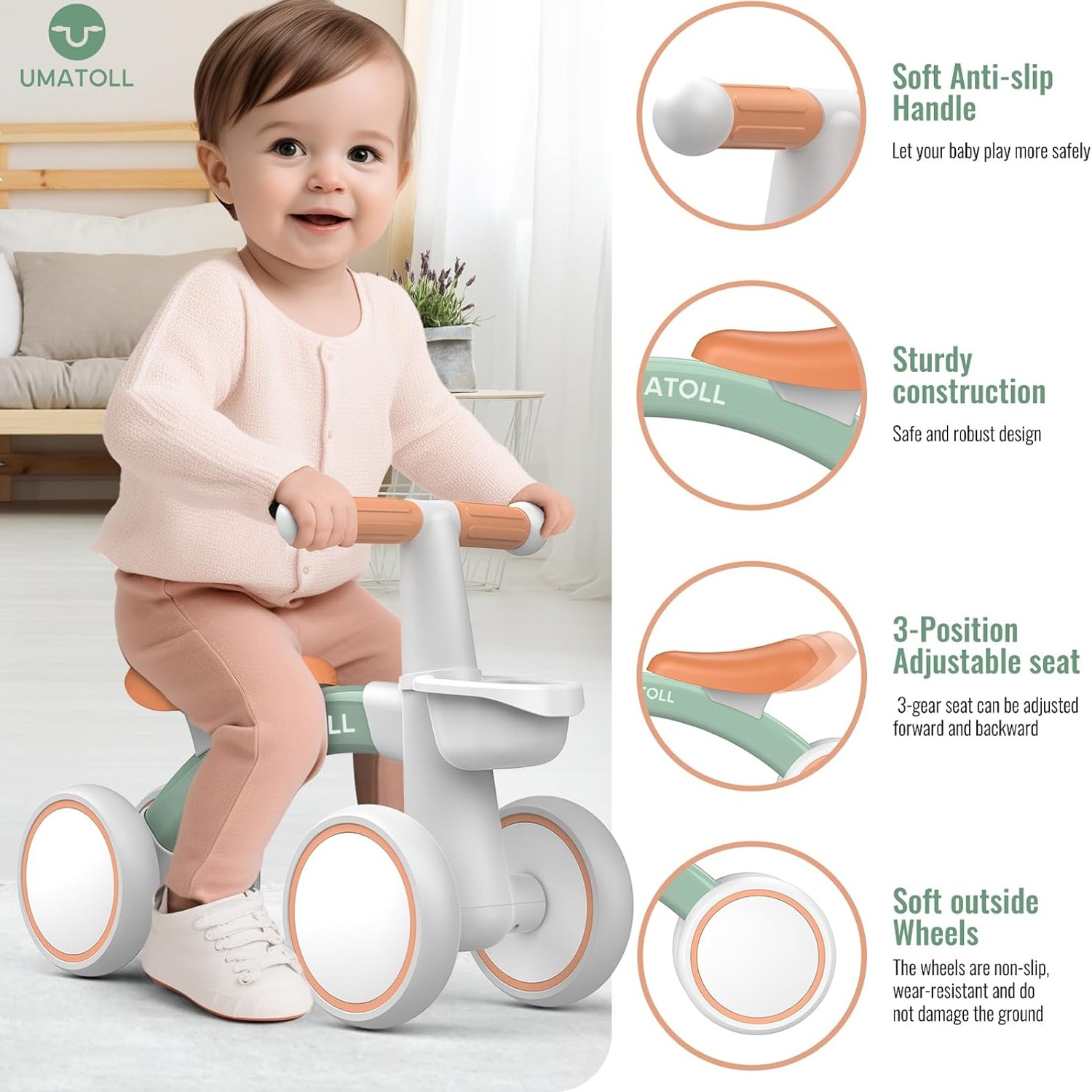
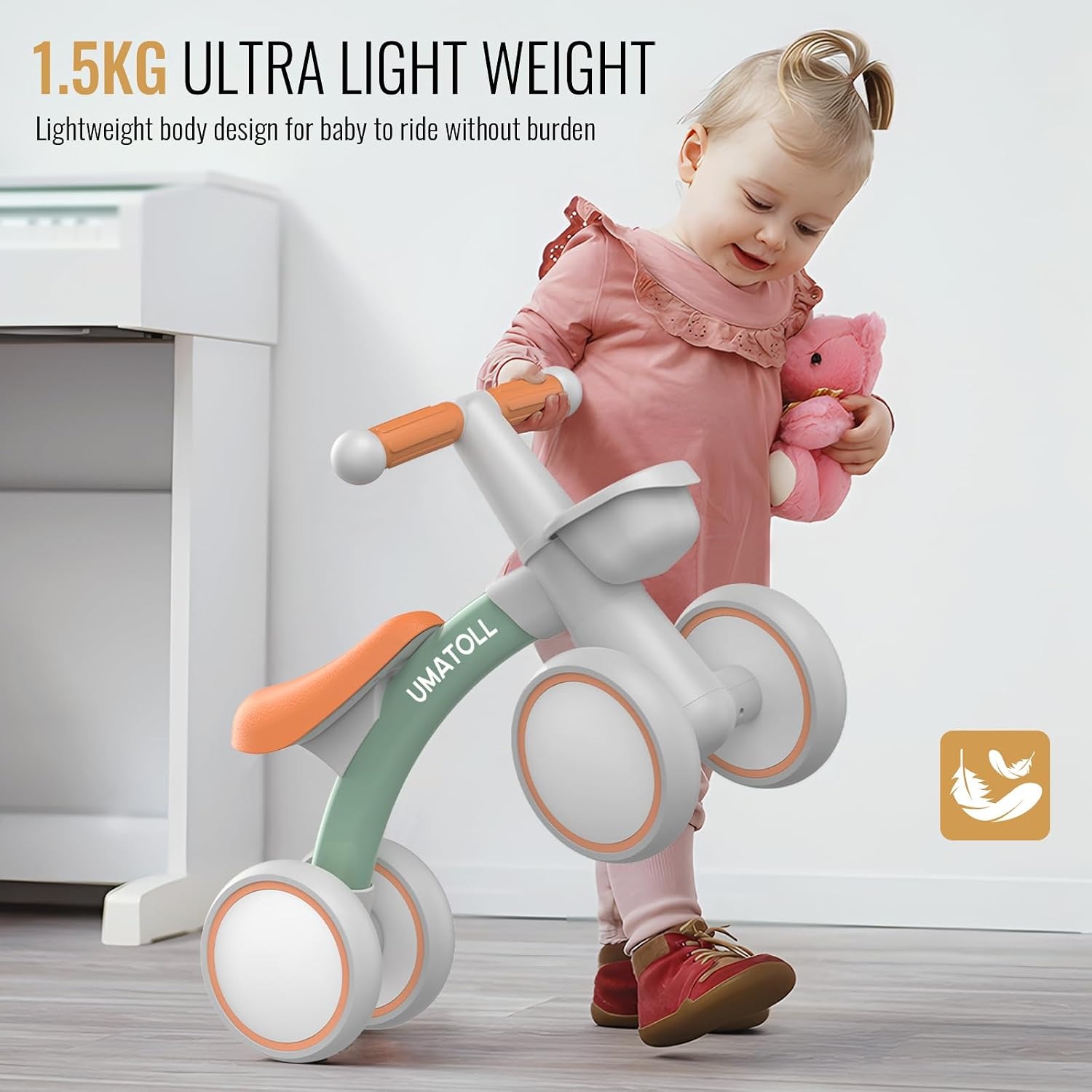
Three things decide whether a toddler gets on with a balance bike or ignores it. The first is weight. A bike that a child cannot lift is a bike they abandon the first time it falls over. This one is 1.5 kg thanks to the aluminium frame, which is about the weight of a full drink bottle. A small child can tip it up and carry on.
The second is seat height. If their feet dangle, they feel unstable and they will not get on it twice. The seat here has three positions and moves without tools, so you can start low and raise it as they stretch out.
The third is steering. New riders over-steer. They turn the bars too far, the front wheel goes sideways and the bike goes down. The 135 degree steering limiter on this model stops the bars from spinning all the way around, which makes the bike behave more predictably in the first few weeks.
Who it suits
The bike is aimed at toddlers, with a listed minimum user height of 76 cm and a maximum rider weight of 25 kg. The seat range is described as suiting roughly 12 to 24 months. Height is the number to check, not age. Some 13 month olds are tall and steady. Some two year olds are small and cautious. Stand your child against a wall, mark the top of their head and measure.
Walking confidently is the other prerequisite. A child who is still cruising along the furniture will not get much from it yet, though plenty of parents buy early and park the bike in the hall until the child reaches for it on their own.
It also suits households without much outdoor space. Foam wheels are quiet on floorboards, so a hallway becomes a practice track on wet days. That makes it a sensible pick if you are after the best indoor balance bike for toddlers rather than something that only earns its keep at the park.
How to choose between balance bikes
If you are comparing a few models, here is what actually matters.
Weight first, as covered. Under 3 kg is good, under 2 kg is very good for the youngest riders.
Then wheels. Foam, like the EVA wheels here, never punctures and never needs pumping. Air tyres grip better on rough ground and absorb bumps, but they are heavier and they go flat. For a first bike used mostly on paths, driveways and indoor floors, foam is the easier life.
Then the seat. Check both the lowest position and the total adjustment range. A bike with a very low starting seat buys you months of extra use at the front end.
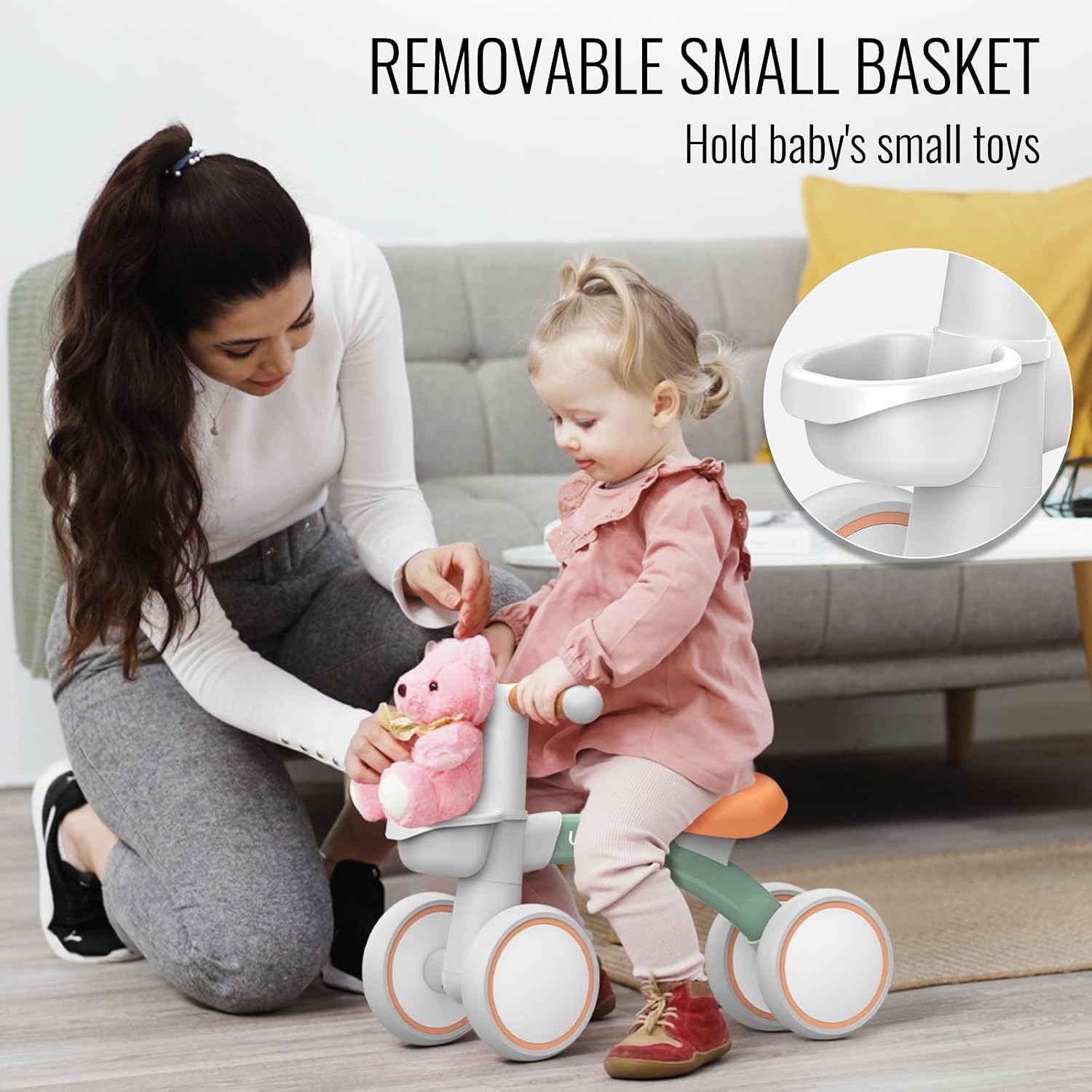
Then the details that you only notice later. Does the seat lock with a clear click, so you know it is secure? Is there a steering limiter? Are there exposed bolts at shin height? Can the child get on and off without help? This model includes a removable front basket, which sounds like a gimmick until you watch a toddler fill it with leaves and then insist on riding home very carefully so nothing falls out. Small things like that keep a child coming back to the bike.
Getting started in the first week
Do not teach. That is the main advice. Put the seat at its lowest setting, put the bike somewhere they can reach it, and let them work it out.
Most children follow the same path. They walk beside it pushing the handlebars. Then they straddle it and walk. Then they walk faster. Then, usually on a very slight downhill, both feet come up for a second and they look genuinely startled. Within a few weeks that second becomes ten.
Give them a flat, smooth surface with no traffic. A quiet driveway, a tennis court out of season, an empty car park on a Sunday, a long hallway. Avoid thick grass and loose gravel at this stage, because the effort of pushing through it kills the fun fast.
Put a helmet on from the first ride, even indoors at walking pace. A helmet is not supplied with this bike, so buy one that fits snugly and sits level. Doing it from day one means it never becomes something to argue about.
Keep sessions short. Ten minutes of enthusiastic riding beats forty minutes of being nagged to try again.
Looking after it
There is almost nothing to maintain. No chain, no gears, no tyres to inflate. A damp cloth with a little mild soap handles mud and sticky handprints on the frame, seat and handlebars. Dry it off afterwards and do not leave it sitting out in rain, because water that pools in joints will not do the hardware any favours over time.
Before each ride, do a ten second check. Is the seat clicked into position and firm when you tug it up? Are the handlebars tight? Do both wheels spin freely? The wheels are quick release, which is handy for packing the bike into a car boot, so it is worth confirming they are locked in after any transport.
Store it indoors or under cover. At 55 x 25 x 35.5 cm it slides in beside a door or under a hall bench without becoming an obstacle.
What happens next
The payoff comes later. A child who has spent six months gliding has already solved balance, weight shift and steering. When they move to a pedal bike, the only new skill is turning the cranks, and that generally takes an afternoon rather than a summer. Most of these children never use training wheels at all.
In the meantime, the bike does quieter work. It builds leg strength, it builds the confidence that comes from getting somewhere under your own power, and it gives a two year old a reason to want to go outside.
The short version
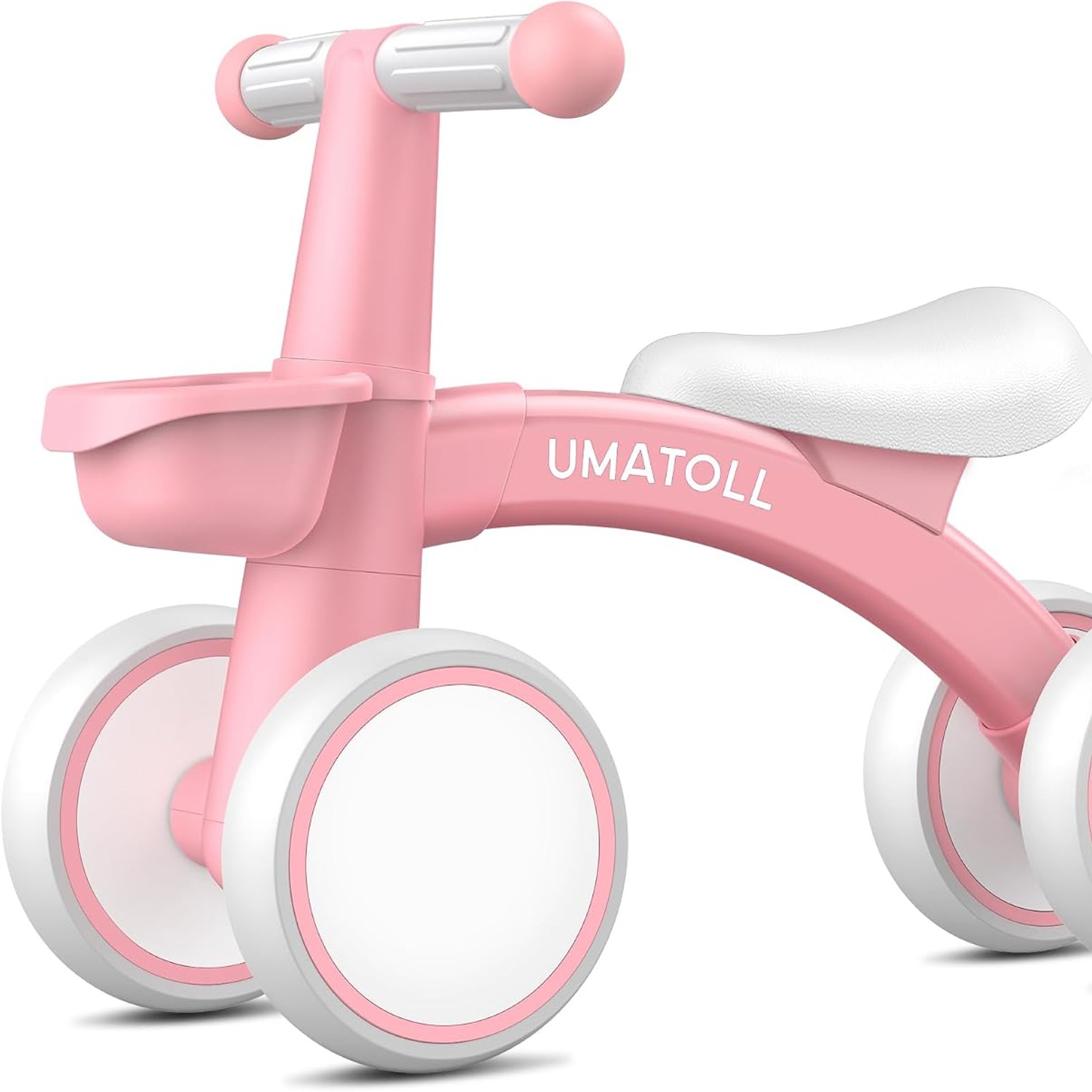
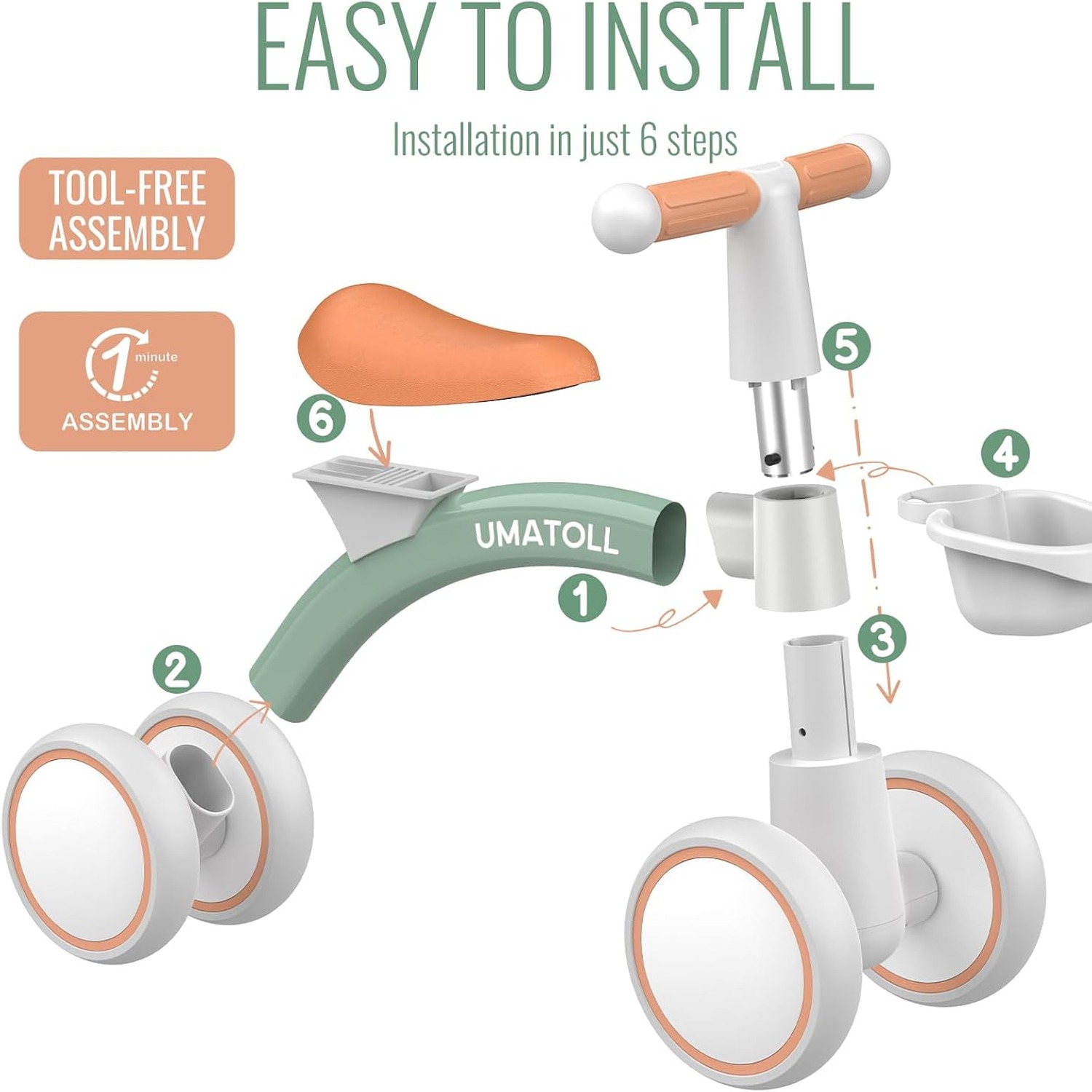
This is a 1.5 kg aluminium balance bike with 15 cm foam wheels, a three-position tool-free seat, a 135 degree steering limiter and a removable basket. It carries riders up to 25 kg and the listed minimum user height is 76 cm. Assembly is required but needs no tools, and it comes with a one year limited manufacturer warranty.
Check your child's height against 76 cm, start the seat at its lowest setting, add a helmet, and then mostly get out of the way. They will work the rest out faster than you expect.