
The complete guide
Choosing a Pikler Triangle Set for Indoor Play
A place for climbing when play stays indoors
Some children want to climb long before the weather, the garden or the day's plans make it easy. Sofas and chairs may become tempting climbing spots, even though they were not designed for that job. A dedicated indoor climbing frame gives families another option, with play kept in a space an adult has prepared and checked.
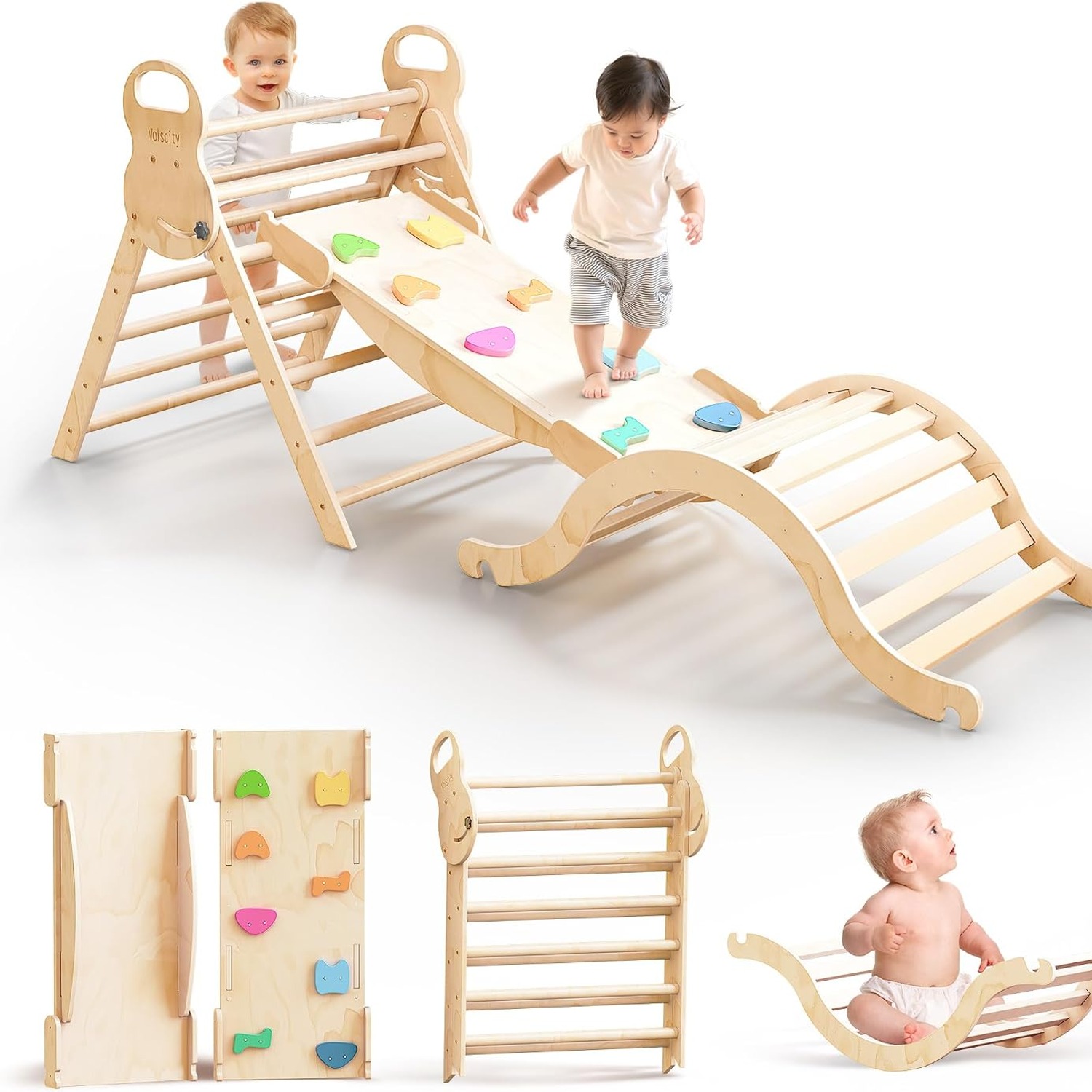
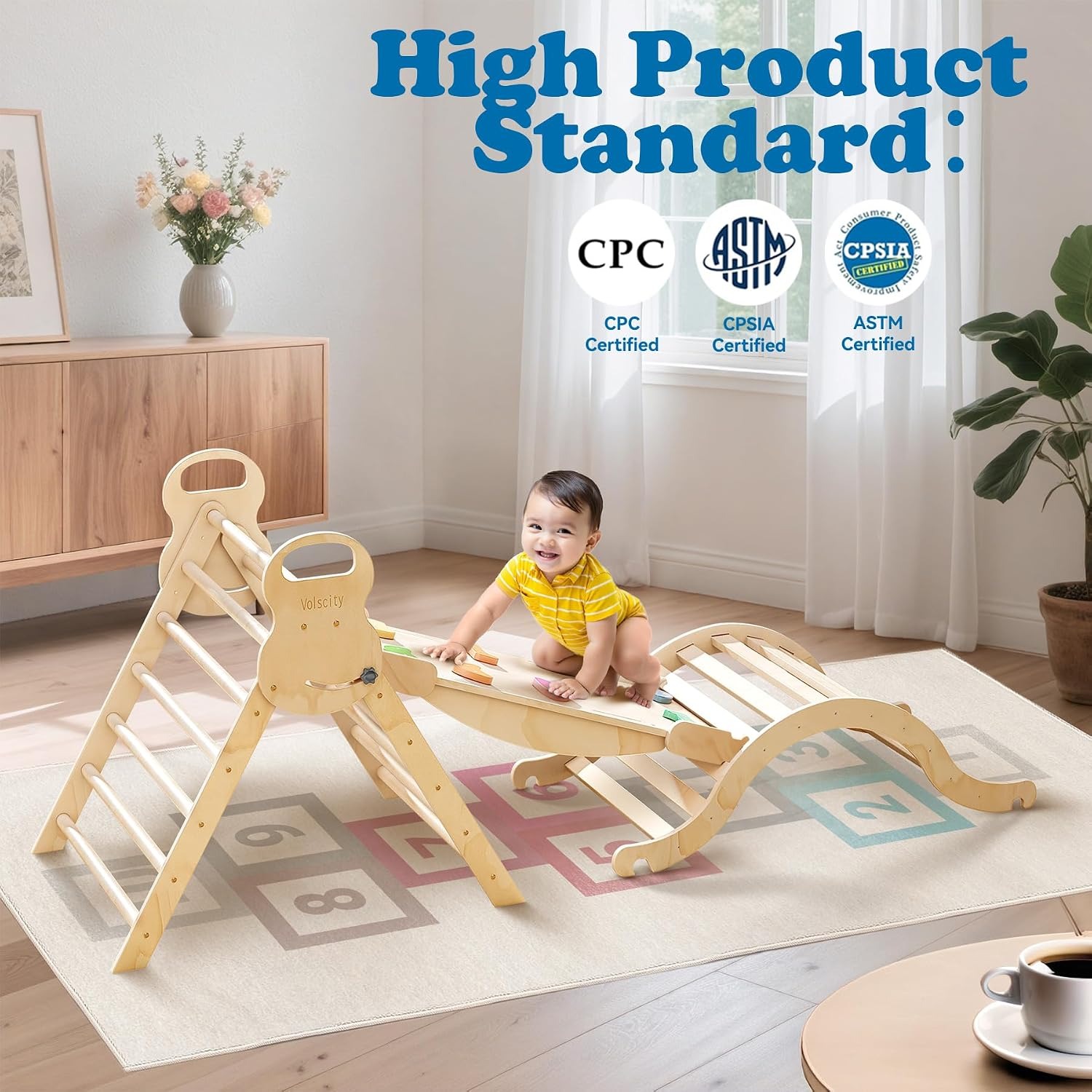
The Pikler Triangle Set brings a triangle climber, arch and reversible ramp into that space. Its different surfaces offer climbing and sliding activities without a powered mechanism. It still needs adult supervision, a suitable layout and careful use.
The first question is not how many ways it can be arranged. It is whether the set fits your child, your room and the time you can give to supervising play.
What this set includes
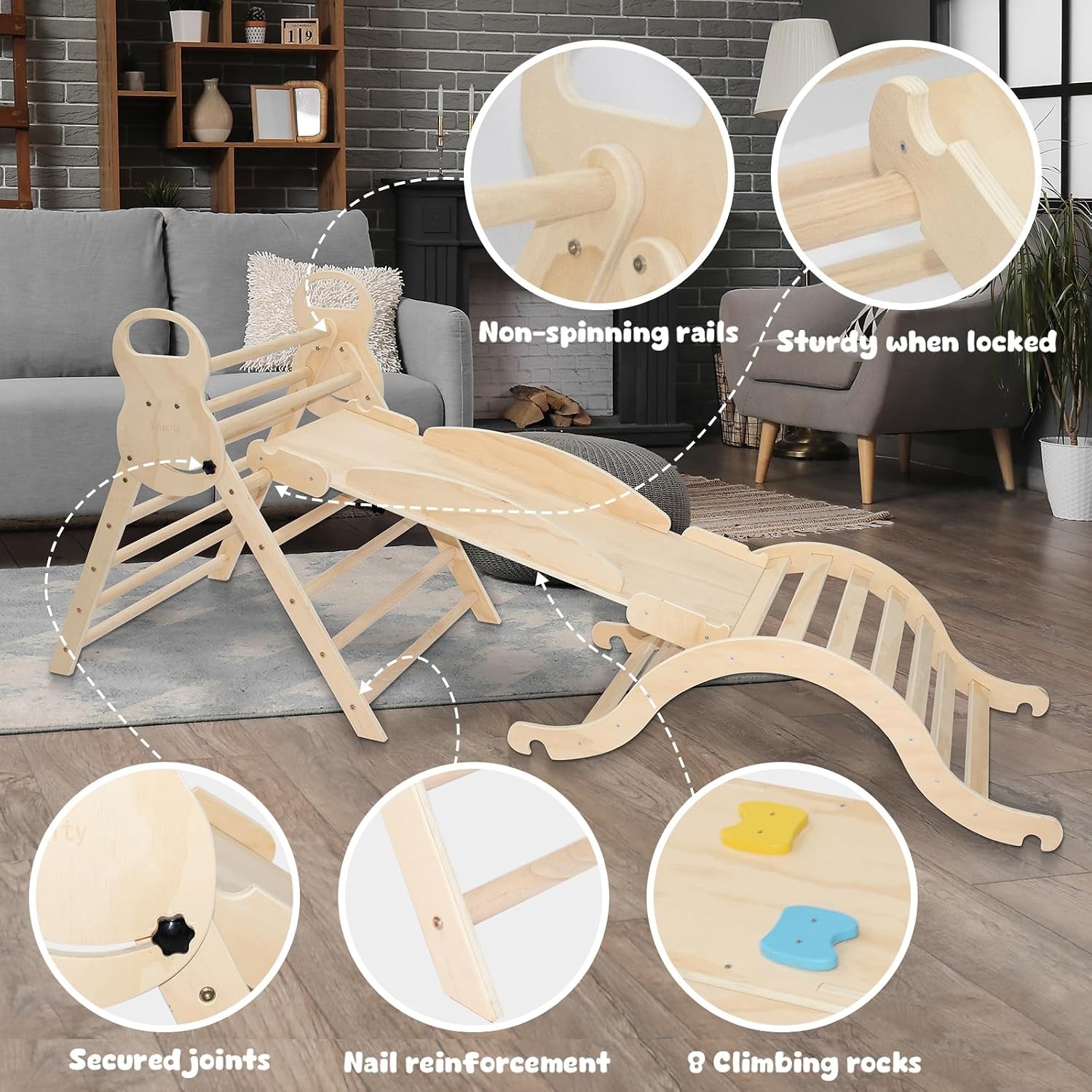
The component list names a triangle climber, arch ramp, rock climber and slide. The description explains that the ramp has two faces, so the climbing and sliding functions should not be read as proof of separate boards.
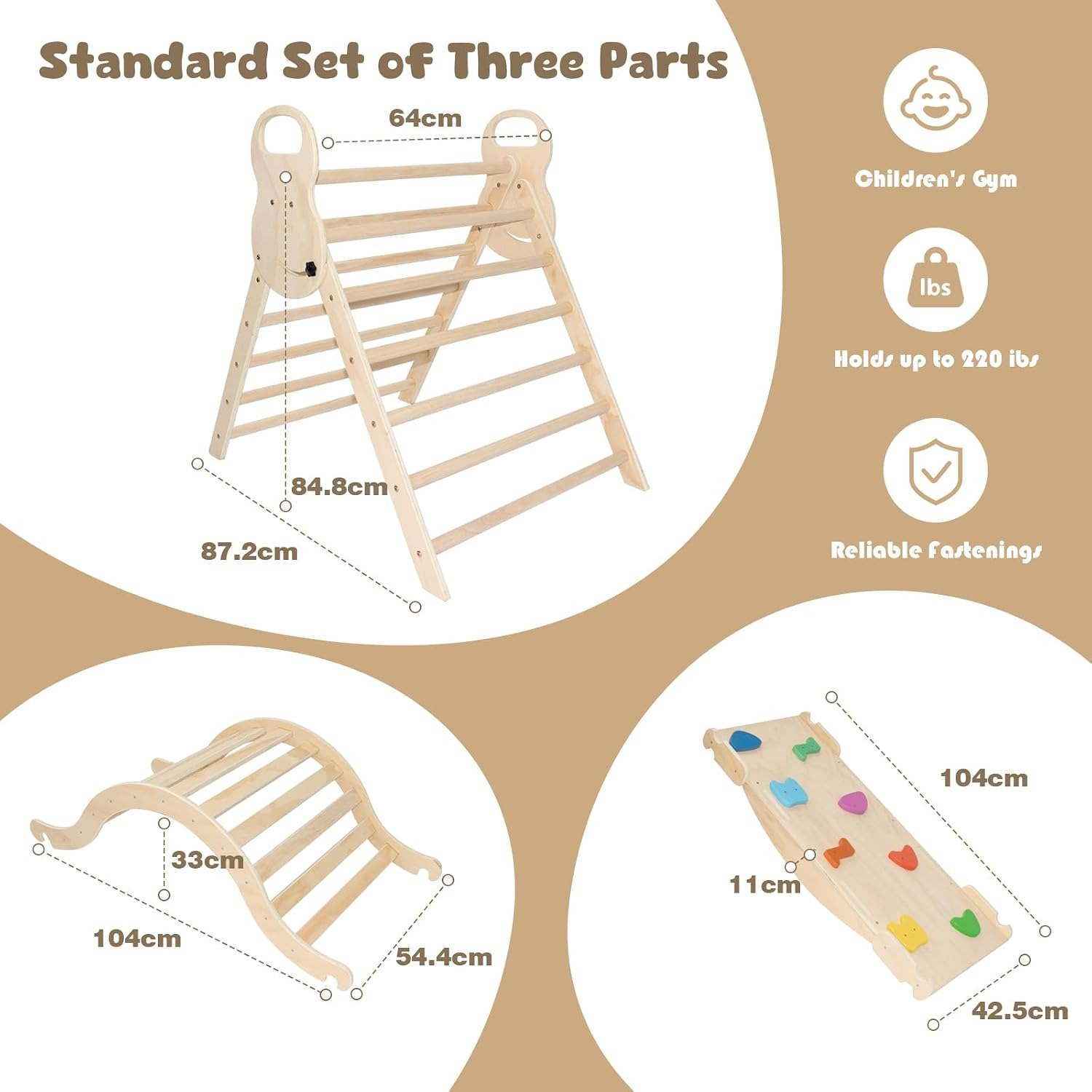
The triangular frame provides a ladder-style climbing structure. The arch is described as having slats, while the ramp offers a climbing face and a smoother sliding face. The listing also describes handrails on the ramp.
Together, these parts give children different surfaces and routes to explore. They should only be connected in ways allowed by the supplied instructions. A layout that looks possible in a photograph is not enough to establish that it is suitable.
Before assembly, compare the delivered parts with the instructions and component list. Resolve any missing or unclear items before a child uses the set.
How to read the age recommendation
Age guidance needs special attention here. The detailed specifications recommend 36 months to 10 years, while some of the supplier's reference text mentions younger children. For this page, the detailed age range is the one to follow, subject to confirmation in the supplied instructions.
That means the phrase “toddler climbing frame” should not be taken to mean it suits every toddler. A child under three falls outside the detailed recommendation.
Age is also only one part of the decision. Children of the same age can differ in reach, balance, confidence and their ability to follow directions. Watch how your child approaches climbing rather than expecting them to use every part straight away.
The set is listed for one player and a maximum user weight of 150 lb, or 68 kg. Those are separate limits. A weight allowance does not permit several children to climb at once.
Measure the room, not just an empty corner
The listed dimensions are 80 × 45 × 40 cm. However, the record does not explain whether those measurements refer to one component or the complete setup. Do not use them as a confirmed footprint for every arrangement.
A Pikler triangle with slide needs space for more than the frame itself. Consider where a child will approach, where the ramp ends and where an adult can stay close. Follow the manufacturer's clearance and surface guidance when setting up.
Look around the proposed play area at a child's height. Nearby furniture, windows, cords and passing foot traffic can affect whether a spot is suitable. A room that looks spacious when empty may feel quite different once the pieces are assembled.
If your available space is tight, ask for the assembled layout dimensions before ordering. It is better to check than to rely on a photo taken in a larger room.
Choose variety that you will actually use
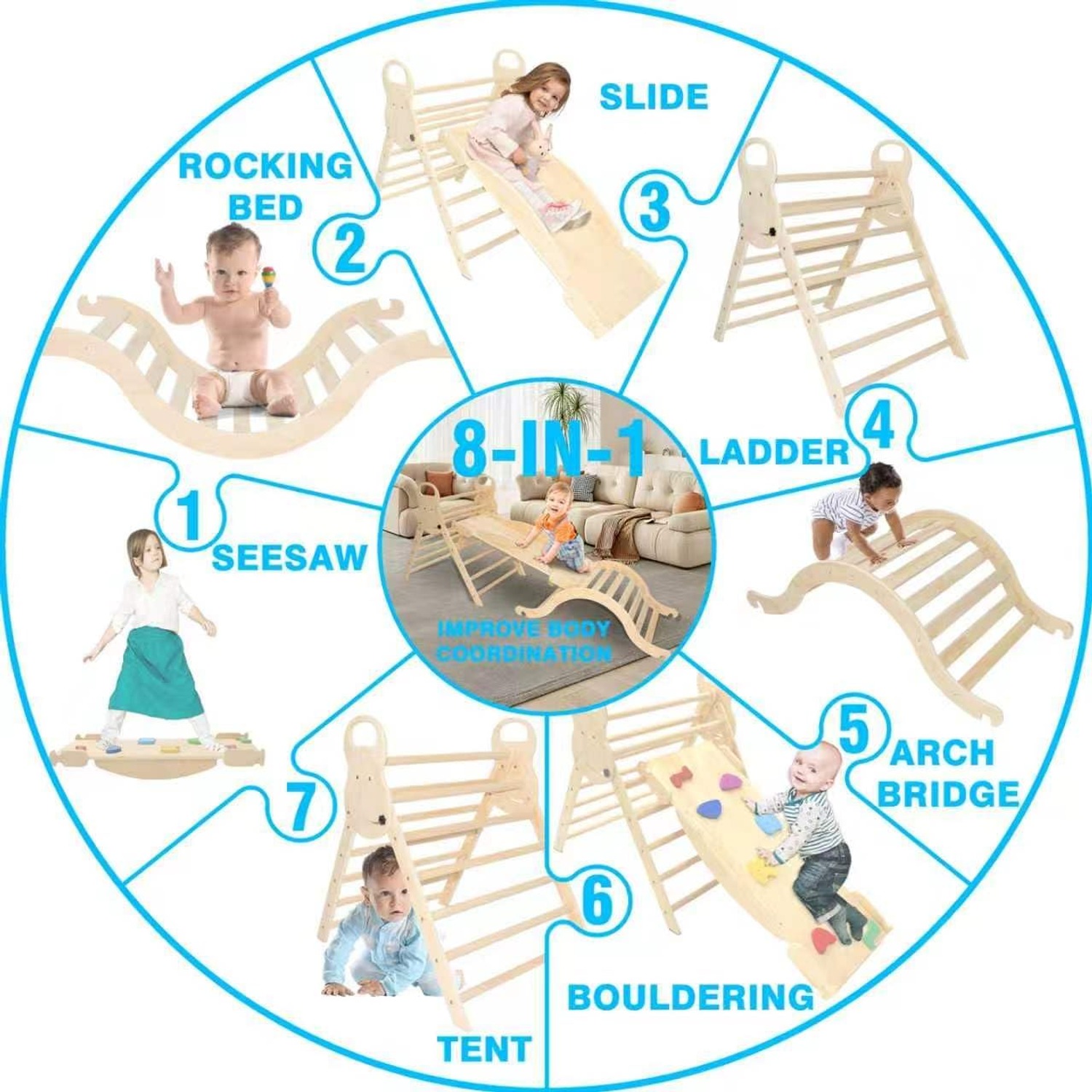
The product is named an 8in1 Large Pikler Triangle Set. That suggests several play options, but the record does not set out eight verified arrangements. Think of the name as a starting point for questions, not a substitute for the instruction manual.
The useful distinction is between the activities the pieces offer. A climbing face asks a child to find hand and foot positions. A sliding face gives a different movement experience. An arch changes the shape of the climbing surface.
You do not need to introduce every option in one session. A simple approved setup may be enough for a child who is getting used to the equipment.
When comparing Montessori climbing toys, focus on clear instructions and practical fit. A high configuration count is less useful if the layouts do not suit your room or your child.
Let the child set a comfortable pace
Indoor climbing toys can offer a place to practise movement, but they do not guarantee milestones or learning results. A child may spend a session stepping onto a low part and stepping down again. That can be a complete play session without reaching the top.
Avoid turning the set into a test. Stay nearby, pay attention and let the child pause or stop. Do not encourage a move simply because an older child could manage it.
Keep one child on the equipment at a time, in line with the listed player count. If siblings are watching, make the waiting area clear so they are not standing in the climbing or sliding route.
Supervision means more than being somewhere in the room. Choose a time when you can watch the activity and respond, rather than trying to fit climbing play around a task that needs your full attention.
Assembly comes before play
A competent adult must assemble this wooden climbing set. Give that task its own time, away from children eager to try the pieces before the work is finished.
Follow the supplied sequence and check that the hardware and connections match the instructions. If a connection is unclear, stop and ask for guidance. Do not guess based on a similar climbing toy or force a part into place.
The description mentions side controls for folding the triangle and locking knobs. Their correct operation should be checked against the actual manual. A feature only helps when it is used as intended.
Once assembly is complete, check the setup again before the first session. Repeat those checks whenever you move or rearrange it. Do not make changes while a child remains on any part of the equipment.
Be realistic about folding and storage
A foldable climbing triangle can be useful in a shared living area. This model's triangular climber is described as folding, which may make it easier to put away between sessions.
That does not mean the full set folds into one compact package. The record gives no folded measurements and does not state that the arch and ramp fold. Plan storage for every component, not only the triangle.
Check the route to your storage spot as well as the spot itself. A cupboard may have enough internal space but an awkward doorway. Product weight is not specified, so do not assume the pieces will be easy for every adult to carry.
Keep children away during folding and unfolding. Store the equipment securely indoors, where it will not create a new climbing opportunity when play has finished.
Wood, finishes and everyday care
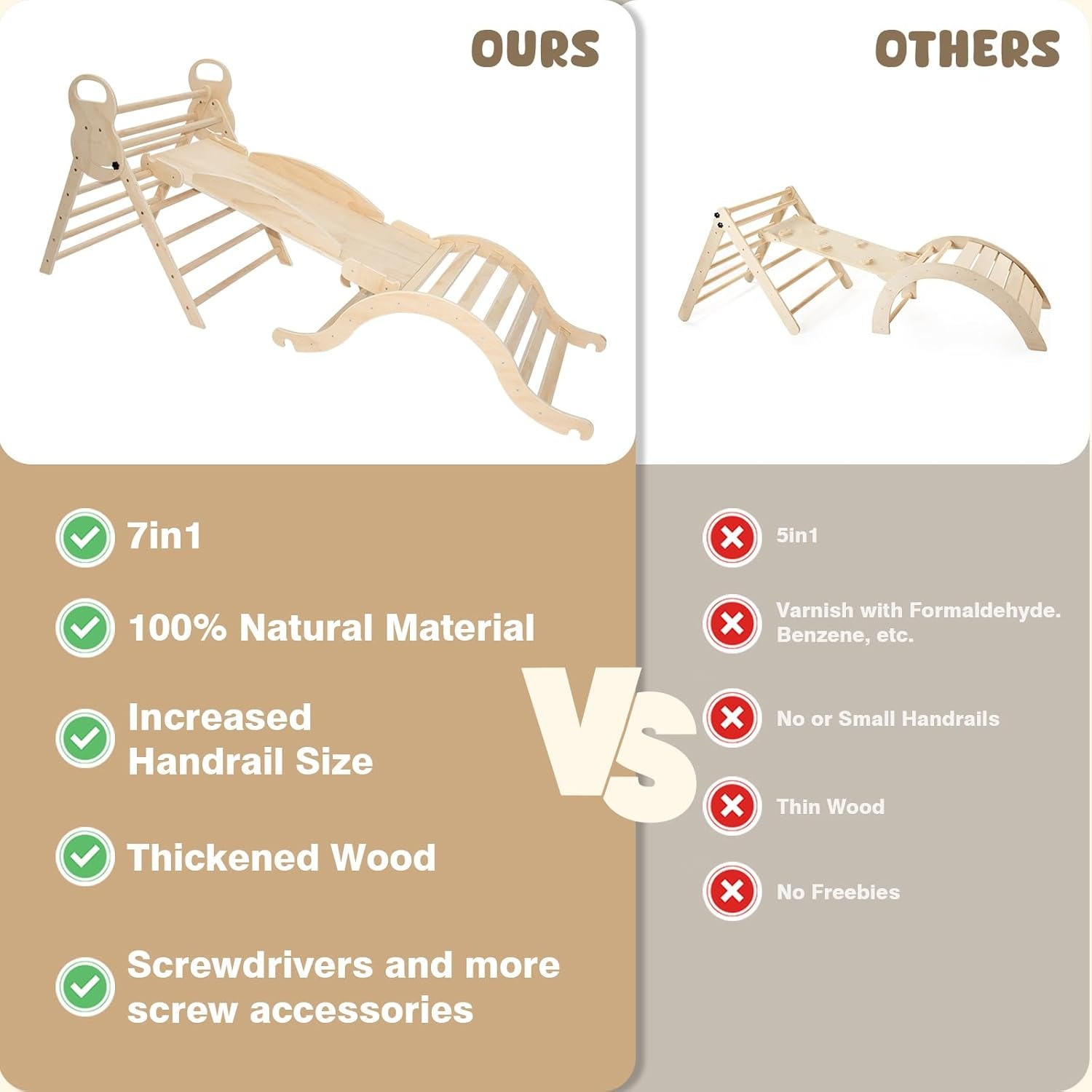
The detailed specifications describe wood and a natural wood colour. They do not identify the wood species, coating or finish. There is also no named safety certification in this record.
Those gaps matter if you are comparing materials or need a particular tested standard. Ask for product documentation rather than assuming a natural appearance proves anything about a coating.
For everyday cleaning, follow the supplied care directions. A soft, lightly damp cloth followed by prompt drying is a sensible general approach for wooden activity toys. Avoid soaking the pieces or leaving moisture at joints.
Inspect surfaces and connections before use. If you find damage, rough areas or loose hardware, stop play until the issue has been properly resolved. Keep the set indoors as specified, rather than moving it outside for occasional garden play.
Buying for another family
A climbing set for kids can be a thoughtful gift, but it is a larger commitment than a toy that fits on a shelf. The receiving adult needs room to assemble it, somewhere to store it and time to supervise its use.
Ask before ordering, especially if the child is near the lower end of the age range. Confirm that the family wants indoor active play equipment and understands the one-player limit.
Delivery timing, warranty terms and return conditions are not specified in this record. Read the storefront's current information before purchase, particularly if the gift is tied to a birthday. Keep order details available in case the family needs help with parts or suitability.
The short version
This set offers a triangle climber, arch and reversible ramp for supervised indoor play. Its detailed recommendation is for ages 36 months to 10 years, with one player and a maximum user weight of 68 kg.
Choose it only after checking room size, storage and the supplied use instructions. Confirm the full assembled footprint if space is limited. The best fit is a set that works in your home and lets your child explore at a comfortable pace, with an attentive adult close by.