The complete guide
How to Choose a Kids Art Easel That Actually Gets Used
The problem with drawing at the kitchen table
Children draw. That is not the hard part. The hard part is where they do it.
The kitchen table is the default, and it mostly works until dinner, homework, or someone's laptop needs the space. So the paper gets moved, the half-finished picture gets a crease in it, and the markers migrate to a drawer. A week later nobody can find the blue one.
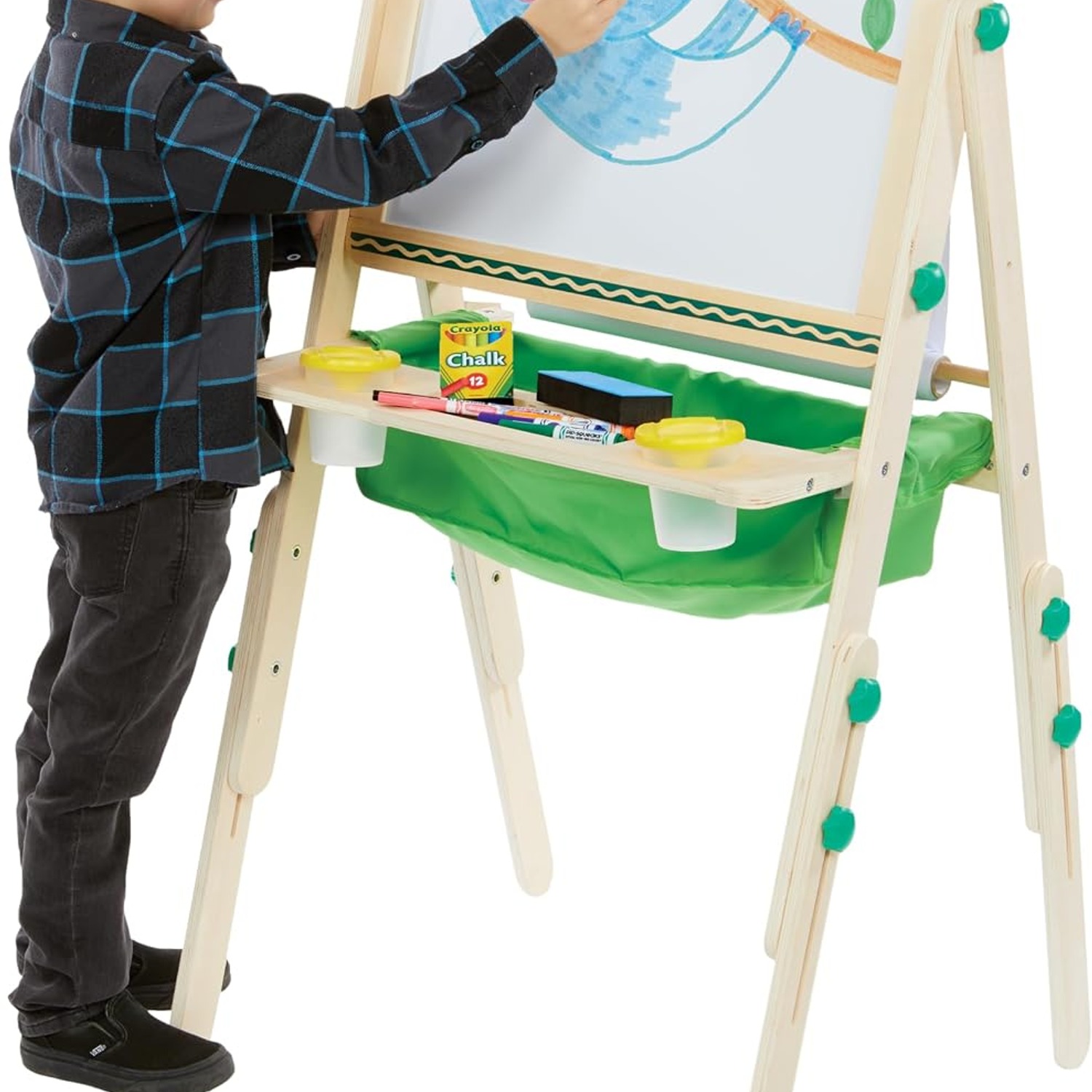
A standing easel changes the arrangement in a small but real way. The drawing has somewhere permanent to happen. The supplies live on a shelf under the board instead of in three different rooms. And because the surface is vertical, a child can walk up, make a mark, and walk away again, which is actually how young children prefer to work. They dip in and out. They do not sit down for forty minutes.
That is the honest case for a kids art easel. Not that it makes children more creative, but that it removes most of the friction between the idea and the drawing.
How a double sided easel works
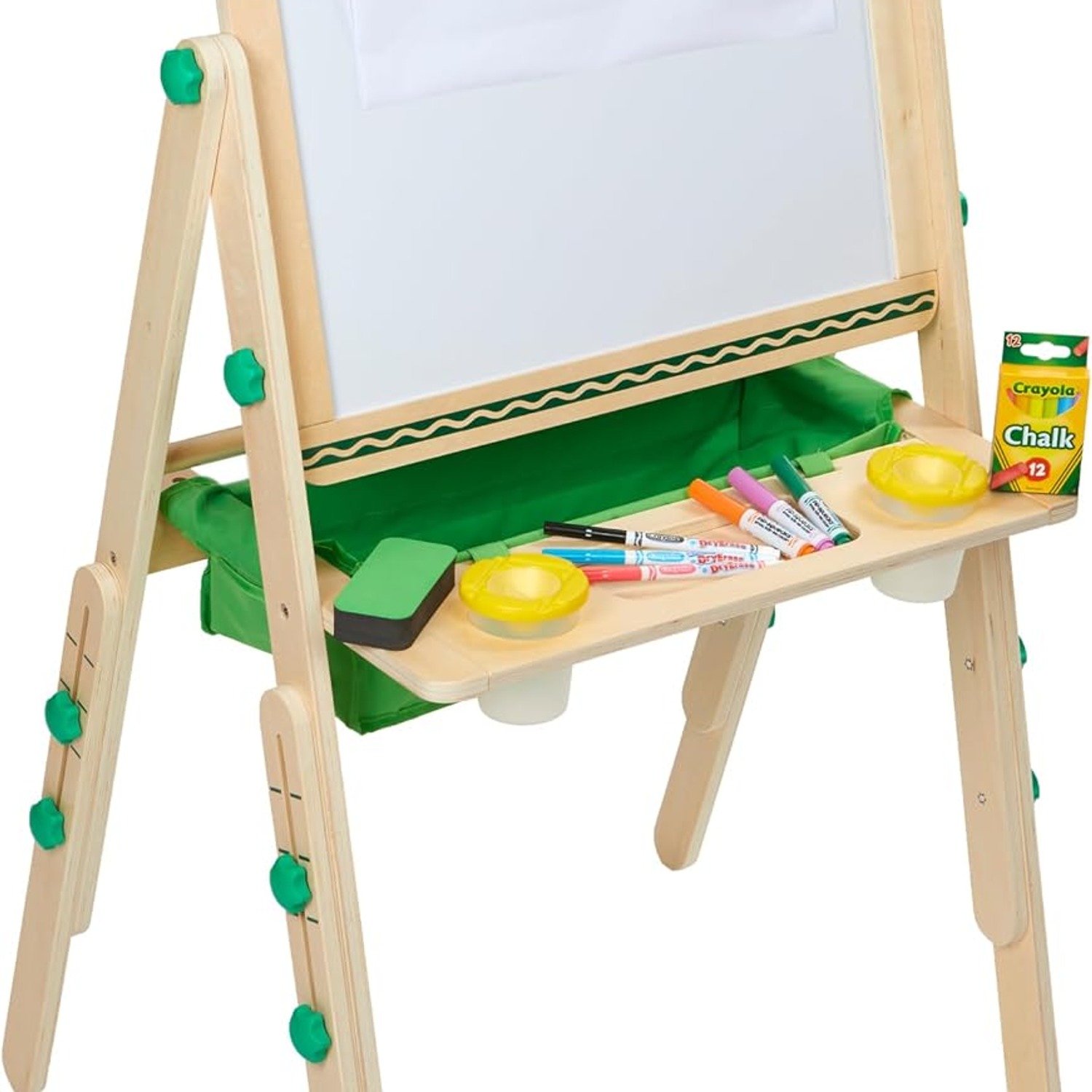
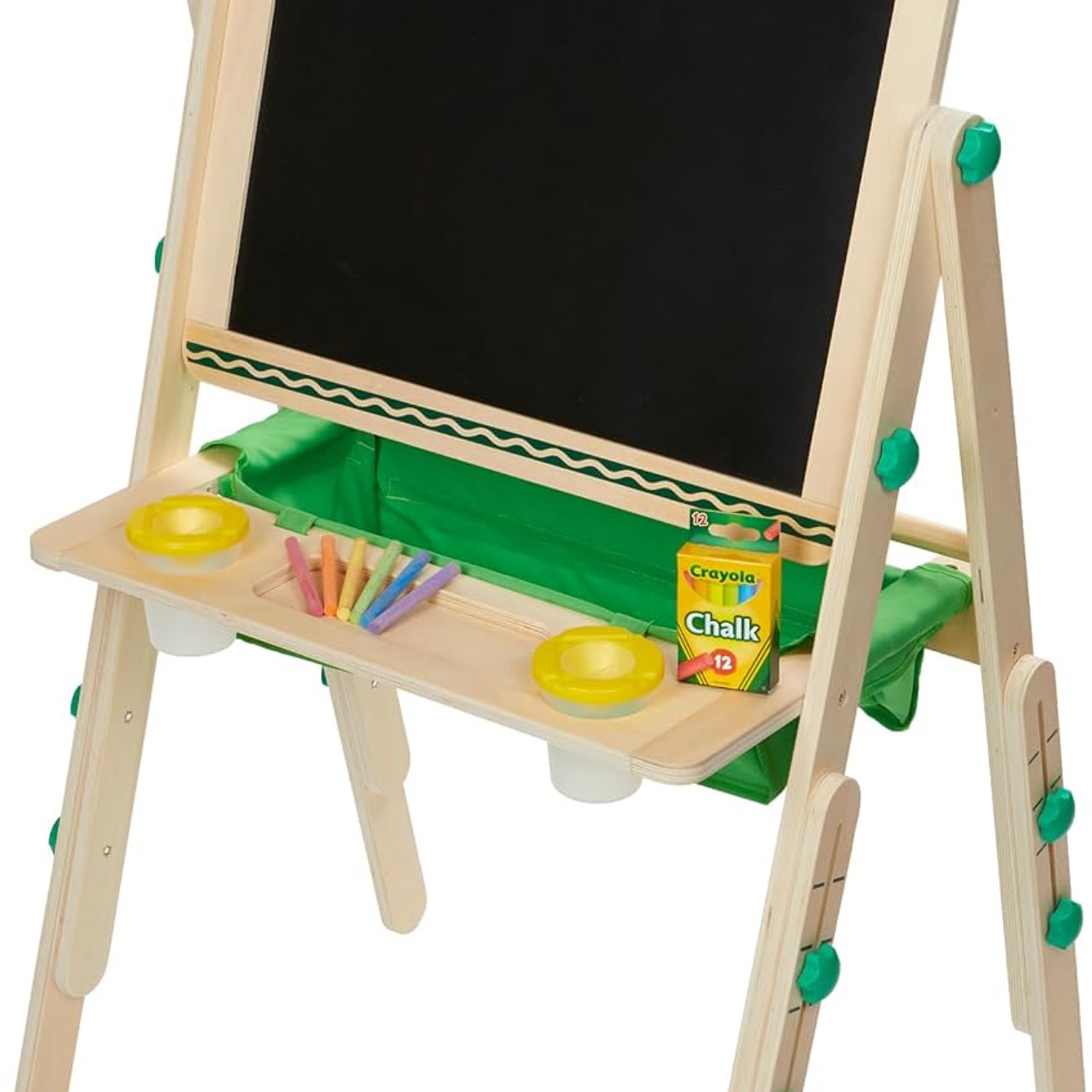
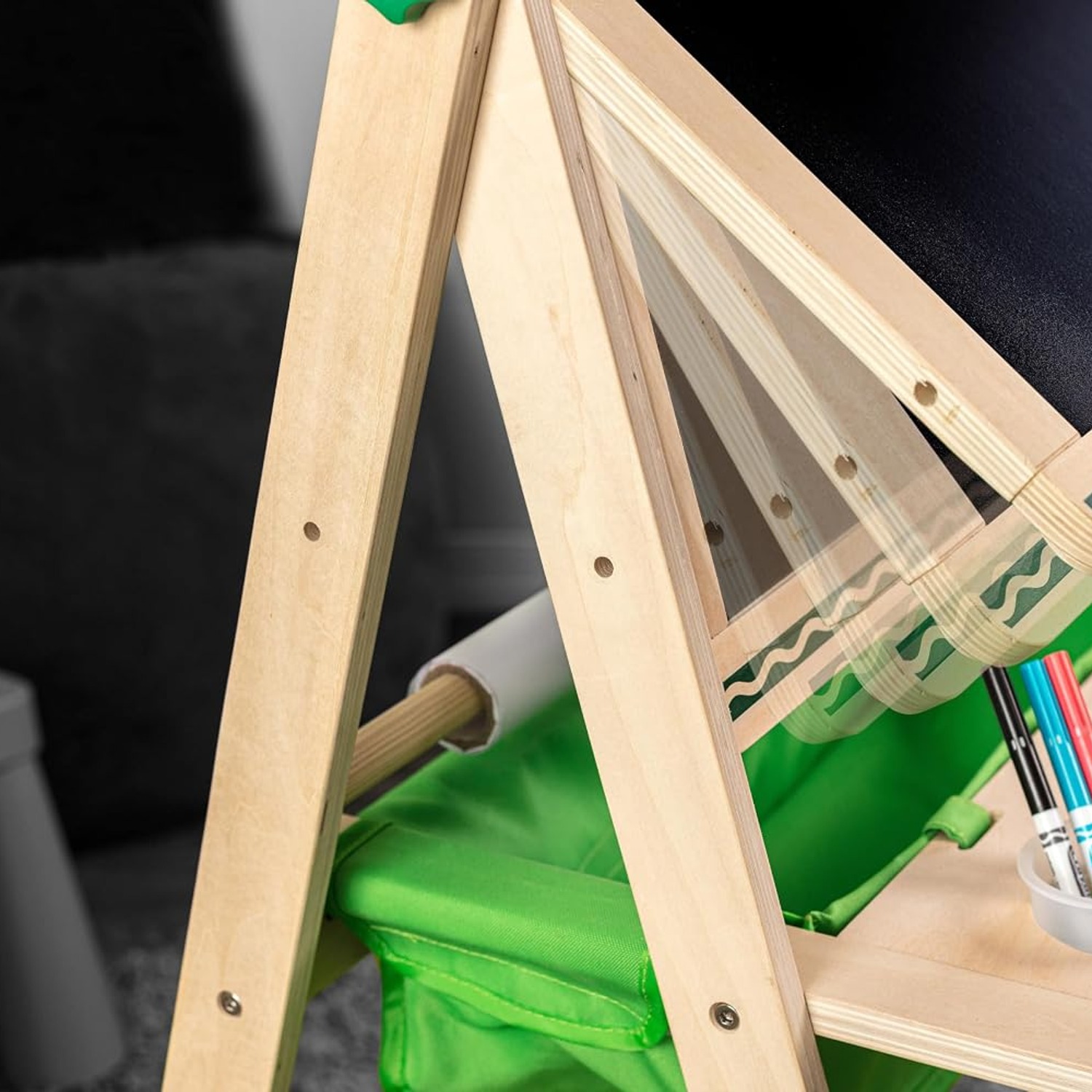
This one is an A-frame design. Two panels meet at the top and spread apart at the bottom, so the easel stands on its own without needing a wall. Each panel is a working surface. One side is a chalkboard. The other is a dry erase whiteboard.
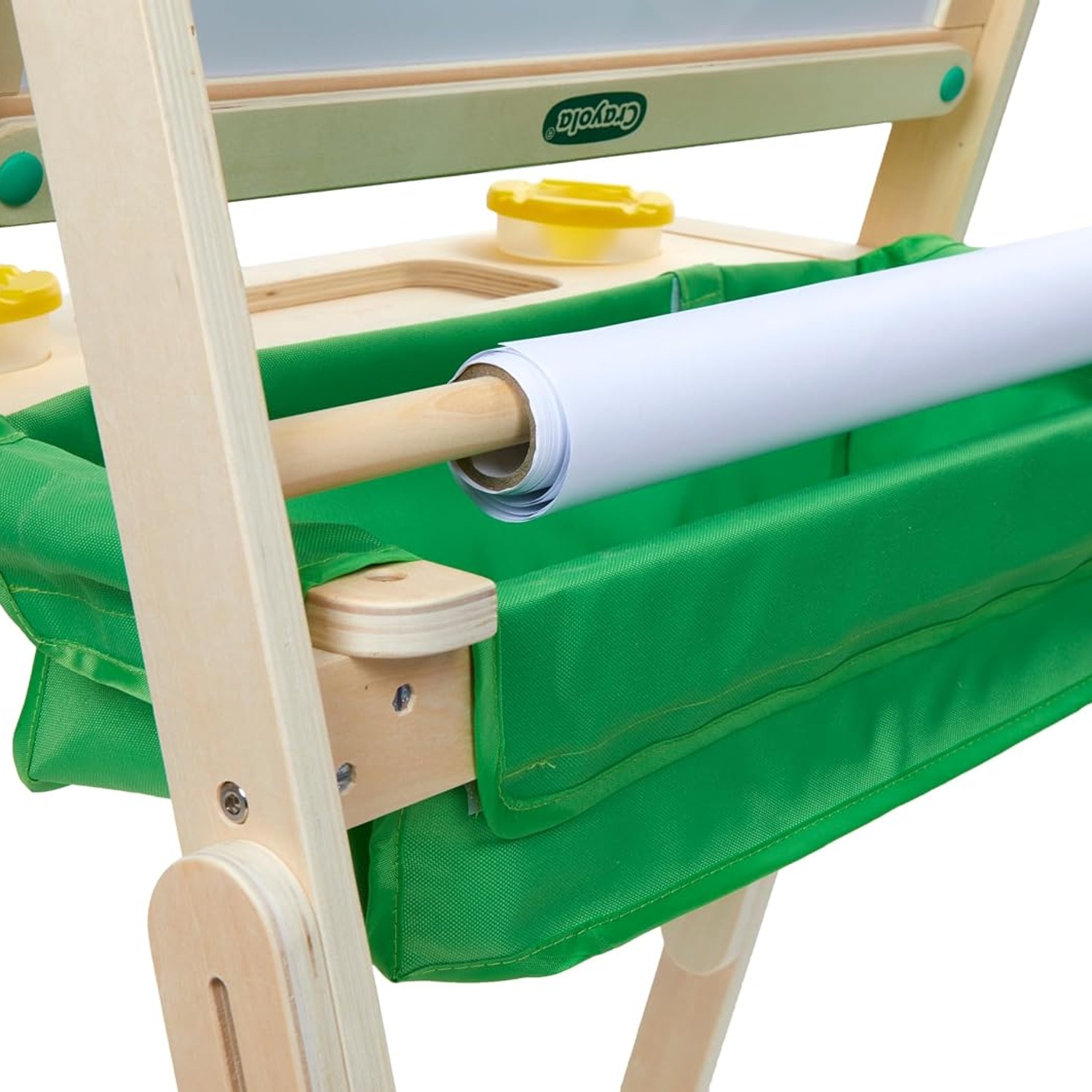
That gives you three modes of use. Chalk on one face, markers on the other, and paper pulled down from the roll at the top when somebody wants to keep what they made. Most of the time a child will pick one and stay there. Occasionally they will circle the easel like a shark, drawing on everything.
If you have two children, the double sided layout does something quietly valuable. They stand back to back and both work at once. Neither has to wait. Neither is leaning into the other's picture. For families with siblings a couple of years apart, that is often the whole reason to buy a standing easel rather than a tabletop board.
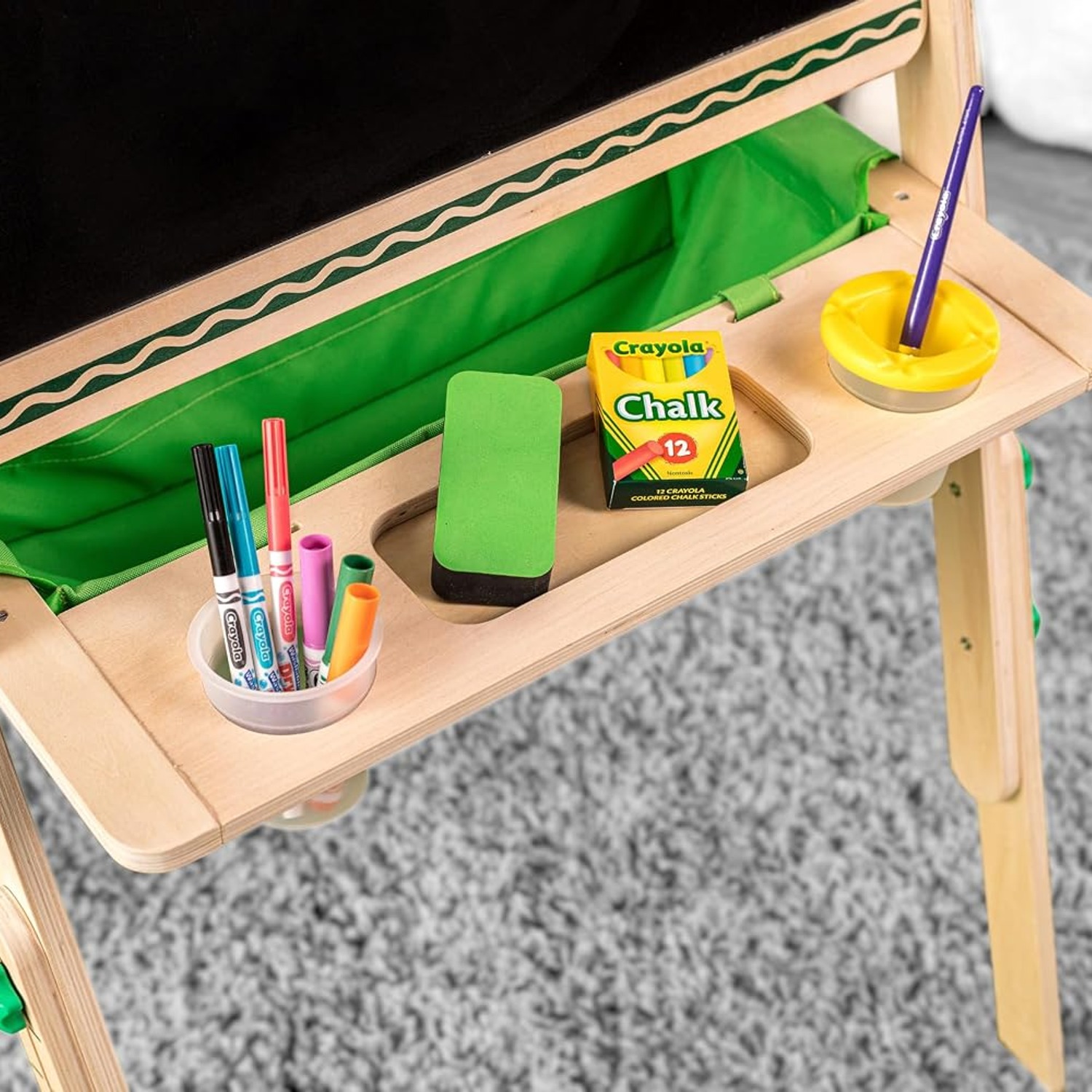
Along the bottom sits a shelf. The markers, chalk, eraser and paint pots go there. It sounds minor. It is the difference between a craft corner that stays set up and one that slowly dissolves.
Who it suits
lists the easel for ages 3 and up, and that lines up with what most parents find. Around three is when a child can stand steadily, hold a chalk or marker with purpose, and understand that the board is for drawing and the wall is not.
Below three, it can still work with an adult nearby. Expect more scribbling than drawing, and expect chalk to be tasted at least once.
Above three is where it really settles in. Four and five year olds use it for letters and numbers as much as pictures. Six and seven year olds use it for spelling practice, game scores, shop signs during pretend play, and elaborate maps. Because the frame is height adjustable, the board moves up with them instead of being outgrown.
It suits homes where space is tight, too. The footprint is 31.5 cm deep by 45 cm wide. That tucks into a corner of a living room or the end of a hallway without dominating anything.
What to look for when you compare easels
Stability before anything else. A light plastic easel wobbles when a child presses hard, and pressing hard is exactly what children do. Wood with an A-frame base gives you a planted feel. This one weighs 5.33 kg, which is the sweet spot: heavy enough to stay put, light enough that you can carry it to another room with one hand.
Two surfaces rather than one. A single-sided board costs less and is worth less. The second face doubles the use and halves the arguments.
Height adjustment. This is the feature people underrate when shopping and value most a year later. A fixed-height easel suits one age band. An adjustable one follows the child. If you are weighing up a height adjustable kids easel against a cheaper fixed model, work out how many years of use you are actually buying.
Storage built in. Supplies that have nowhere to go end up on the floor. A shelf solves it.
What is included. This set arrives with 23 pieces: the easel, a 38 cm by 198 cm paper roll, two paint pots, three Pip Squeaks broad line washable markers, 12 coloured chalks, three washable dry erase fine line markers, an eraser and a fabric bag. You are not making a second trip for supplies before anybody can draw.
Washable supplies. At some point a line lands on a sleeve or a cheek. Washable markers make that a wipe rather than an incident.
Setting it up well
Assembly is required, so build it before you hand it over. Lay the parts on a rug so the board faces do not get scratched. Tighten everything firmly, and give the frame a push when you are done to check for movement.
Where you put it matters more than people expect. A level floor is essential, since a slight tilt on a soft carpet makes the easel rock. Natural light helps, because children notice colour better and squint less. Near a doorway or a main walkway is a bad idea, since somebody will eventually clip it with a hip.
If chalk dust bothers you, put a washable mat underneath. It catches most of what falls and shakes out over a bin in seconds.
Finally, set the height properly on day one. The middle of the board should sit roughly at your child's chest. Too high and they draw only along the bottom edge. Too low and they lean over awkwardly.
Keeping it in good shape
Day to day care is simple. Wipe the whiteboard with a dry cloth after use, because marker left sitting for weeks gets harder to shift. Use the eraser on the chalkboard, then a barely damp cloth every so often to lift the dust that builds in the grain.
Never soak either surface, and never soak the wood. A damp cloth and a dry one afterwards is all the frame needs.
Two habits extend the life of the easel more than anything else. Check the screws every few months, since daily use works fittings loose, and keep it indoors. Wooden furniture left out through rain and sun will warp, and no amount of careful wiping fixes that later.
Refill the paper roll when it runs out, matching the 38 cm width. Chalk and markers are easy to replace as they go.
Getting more out of it
Once it is standing, the easel tends to become more than an art station. Children write shop prices on it during pretend play. They keep score during card games. They practise letters because writing them big on a vertical board is more fun than writing them small in a book.
A few things that work well: a weekly drawing theme, a simple alphabet game on the chalkboard side, or letting a child decorate the whiteboard as a menu for a pretend cafe. None of it needs planning. The board just has to be there and ready.
If you want the easel used daily rather than occasionally, keep the supplies stocked and visible on the shelf. Children use what they can see.
The short version
A kids art easel earns its space by giving drawing a permanent home. This one is wood, stands 110 cm tall, folds into an A-frame, and has a chalkboard on one face and a dry erase board on the other. The height adjusts so it follows your child through several years rather than one. A paper roll holder sits at the top, a storage shelf runs along the bottom, and 23 pieces come in the box so it is usable the day you build it.
Assembly is required and it weighs 5.33 kg. Beyond that, it asks very little: a flat patch of floor, an occasional wipe, and a child with something to draw.