Kids Playhouse Company
Company
Shop By Category
T&Cs
Shop Online
  • Playhouses, tents, swings and learning toys for children 0 to 10
  • Free delivery across New Zealand on orders of $75 or more
  • Delivery within 7 working days of dispatch
  • Secure checkout by card or PayPal

Toddler Tricycle | Kids Trike | Ride On Toy for 2 to 5 Years

Toddler Tricycle Kids Trike

$190.99 $228.99 Save $38
  • Wide Rear Stance
  • Carbon Steel Frame
  • Quiet Shock Wheels
  • Scooped Toddler Seat

Price: $190.99 $228.99

  • Delivery time: up to 7 working days by tracked courier, after dispatch within 2 working days
  • Free delivery across New Zealand on orders $75+, otherwise a flat $22
  • Pay by card or PayPal, handled by the payment provider
  • 15 days to change your mind, plus your statutory rights
Product specifications
Recommended Age24 months to 4 years
SizeMedium
Frame MaterialCarbon Steel
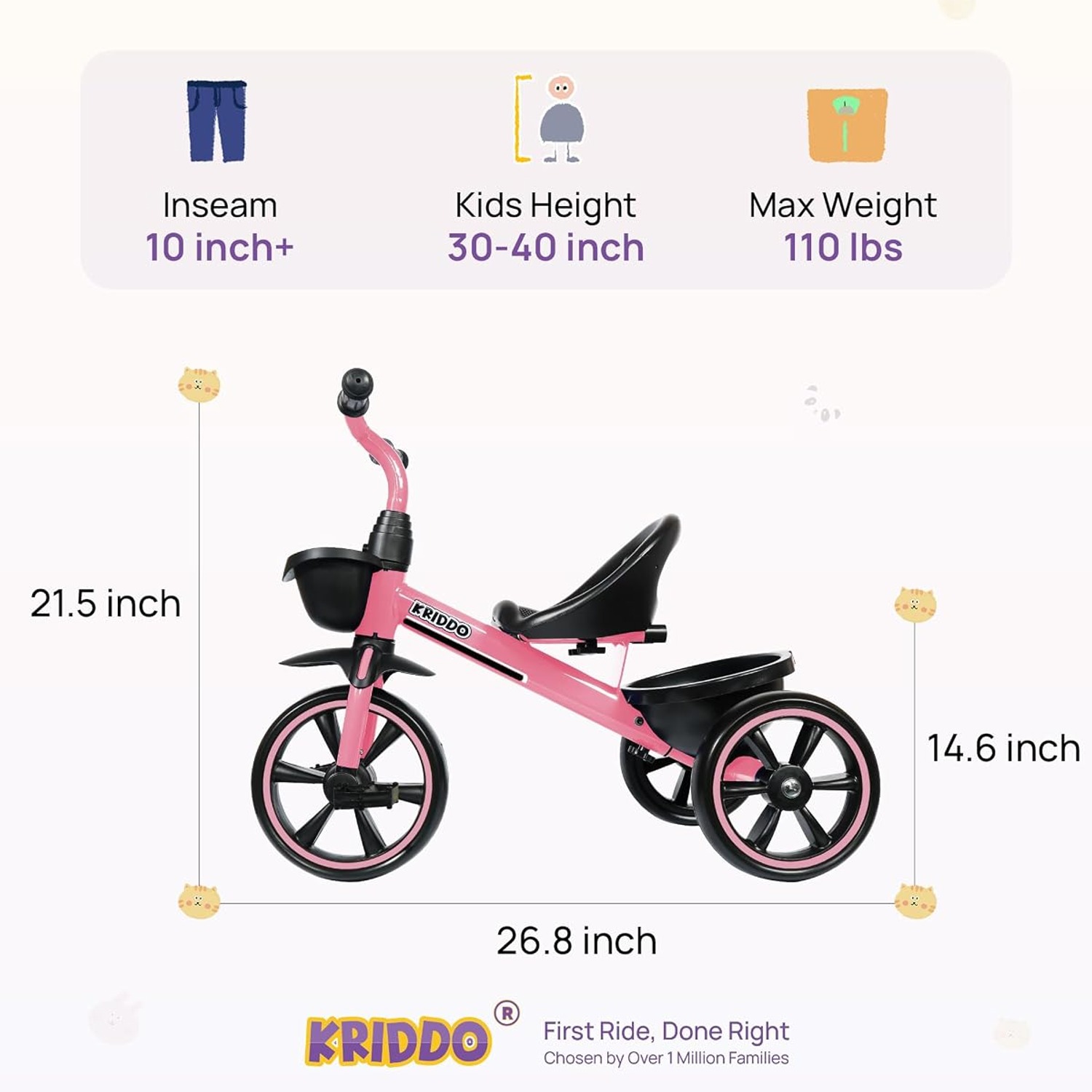
Maximum Rider Weight20 kg (about 20 kg)
Product Dimensions76.2 x 30.5 x 54.6 cm
Packaged Dimensions67.4 x 46 x 55.4 cm
Product Weight4.08 kg
Included ComponentsInstallation manual
Assembly RequiredYes
ThemeBike, Outdoor Play, Play Tricycle
Weight4.08 kg
Shipping & returns

Tracked delivery anywhere in New Zealand. It is free on orders of $75 or more, and a flat $22 below that. Allow up to 7 working days in transit after dispatch within 2 working days.

Our store policy accepts change-of-mind return requests within 15 days of delivery. You cover return postage unless the item is faulty or we agree otherwise. This policy does not limit your rights under New Zealand consumer law.

If it arrives faulty, damaged or not as described, we put it right at no cost to you under the Consumer Guarantees Act 1993, return postage included.

Shipping details · Refunds and returns

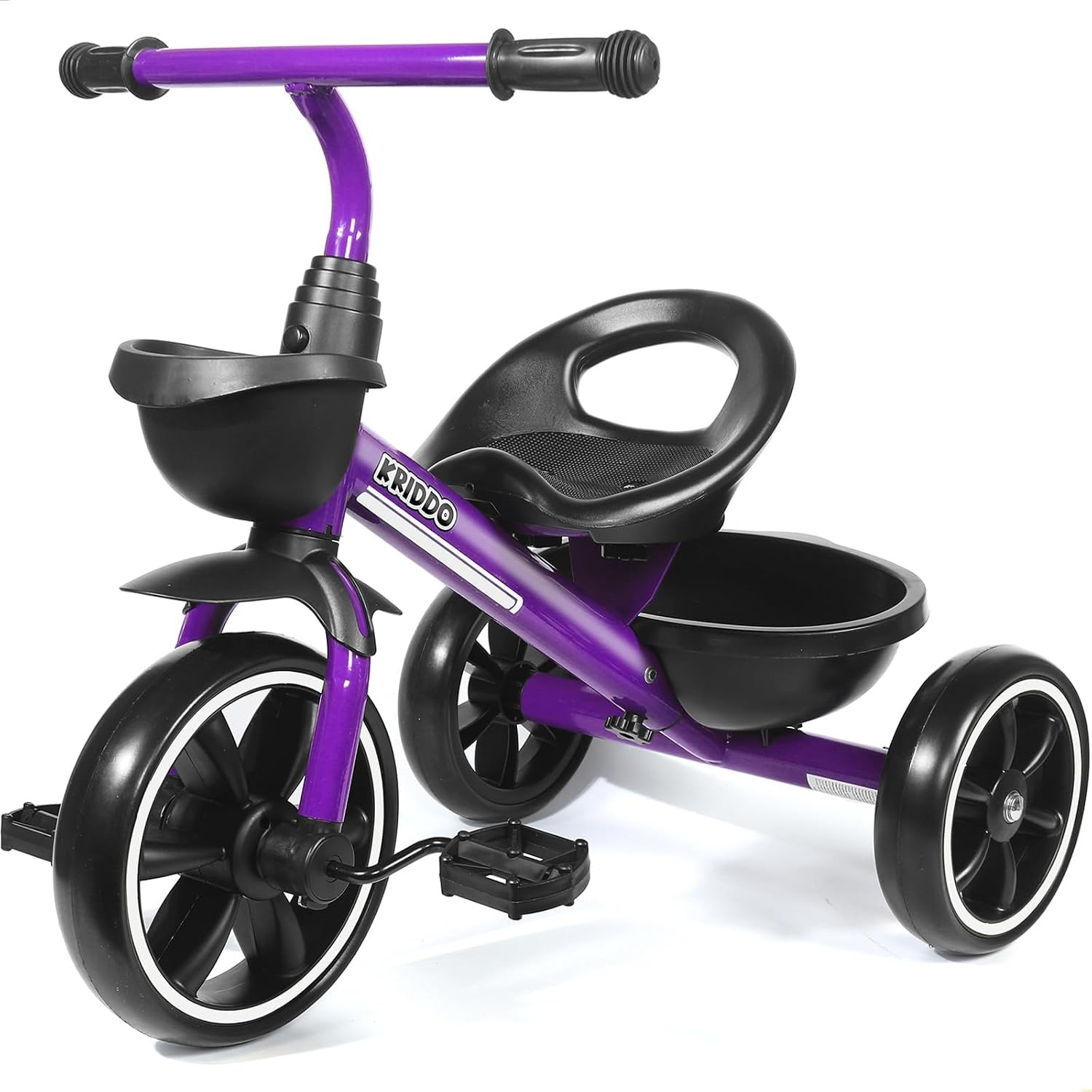
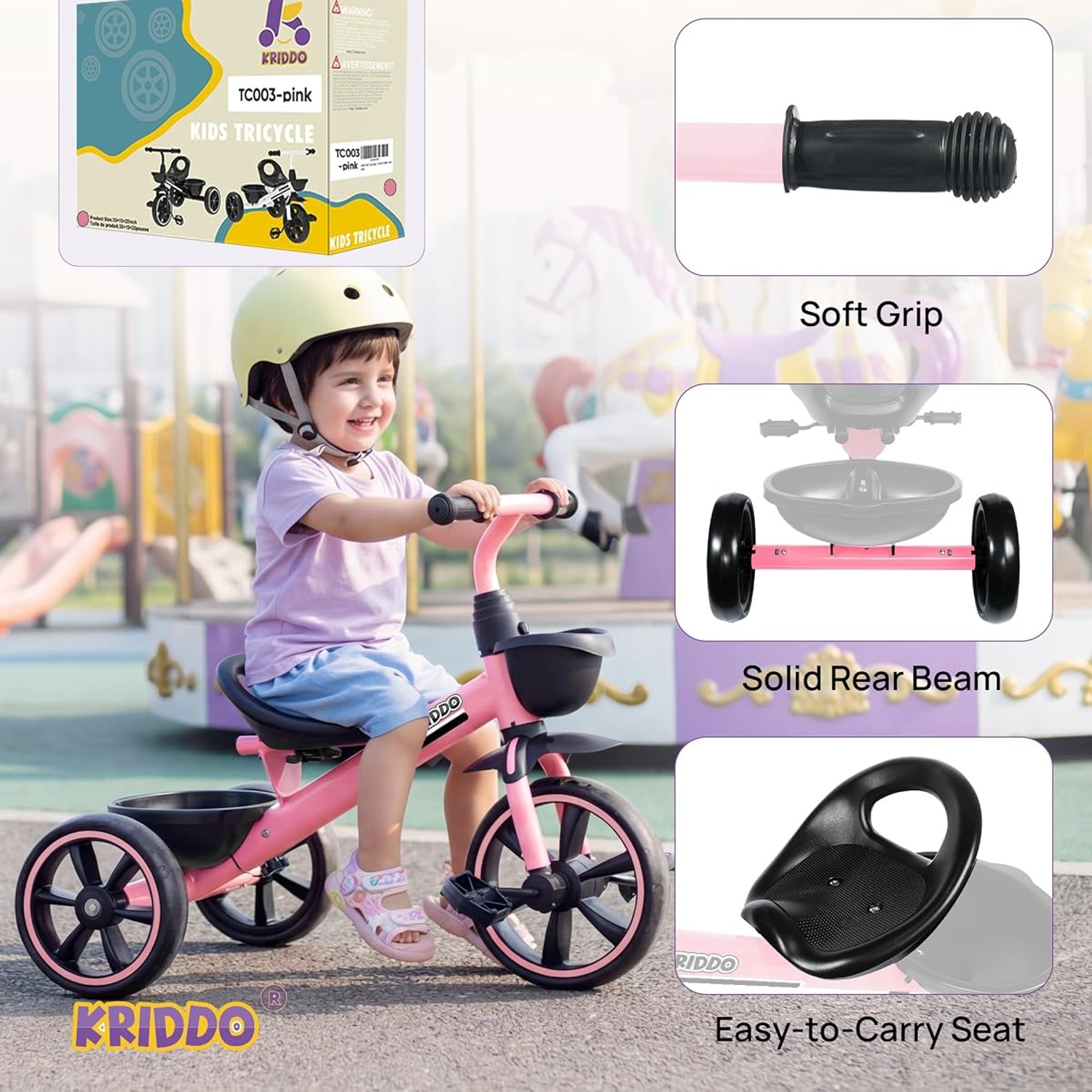
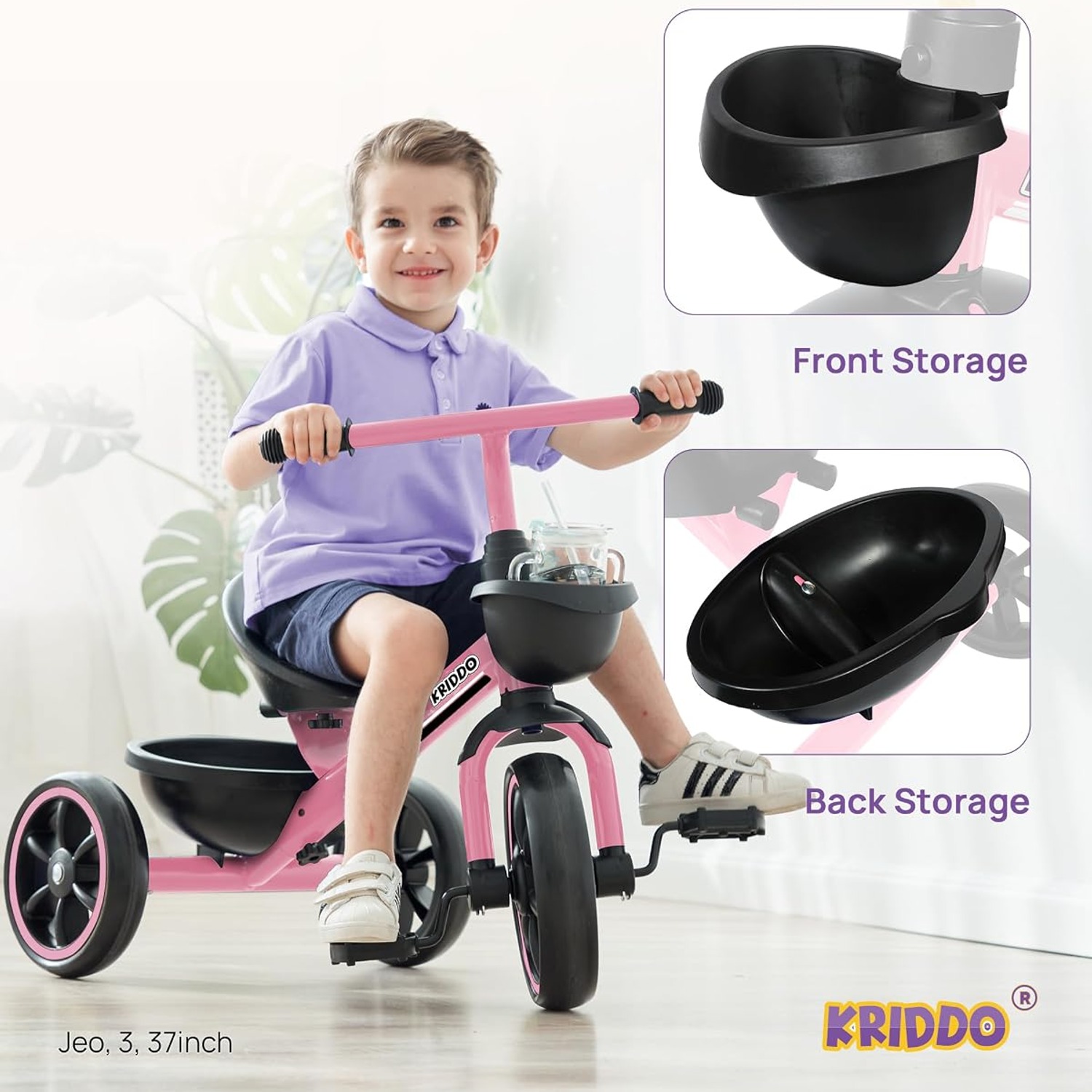
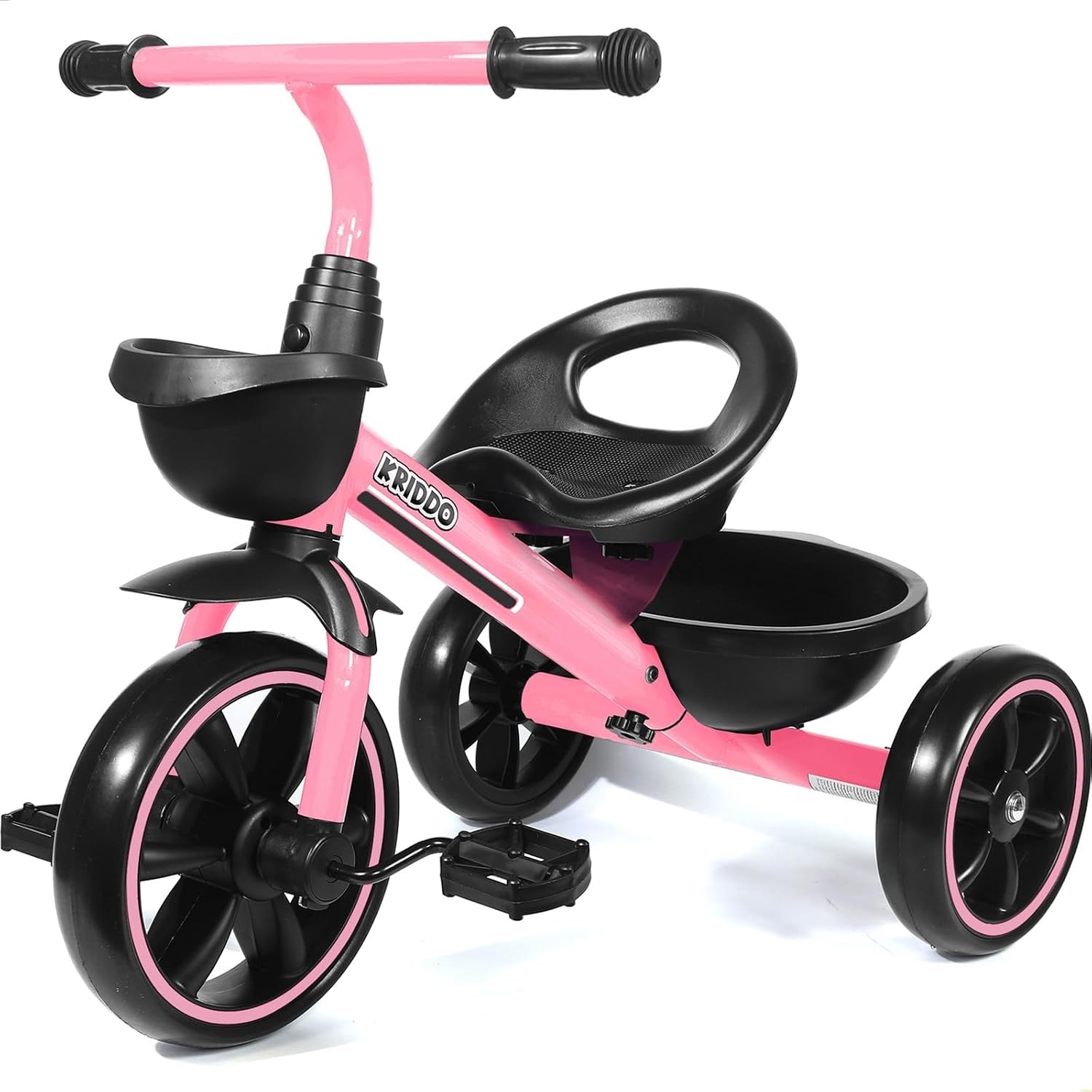
Wide Rear StanceExtended rear wheels and a triangular layout help keep young riders upright.
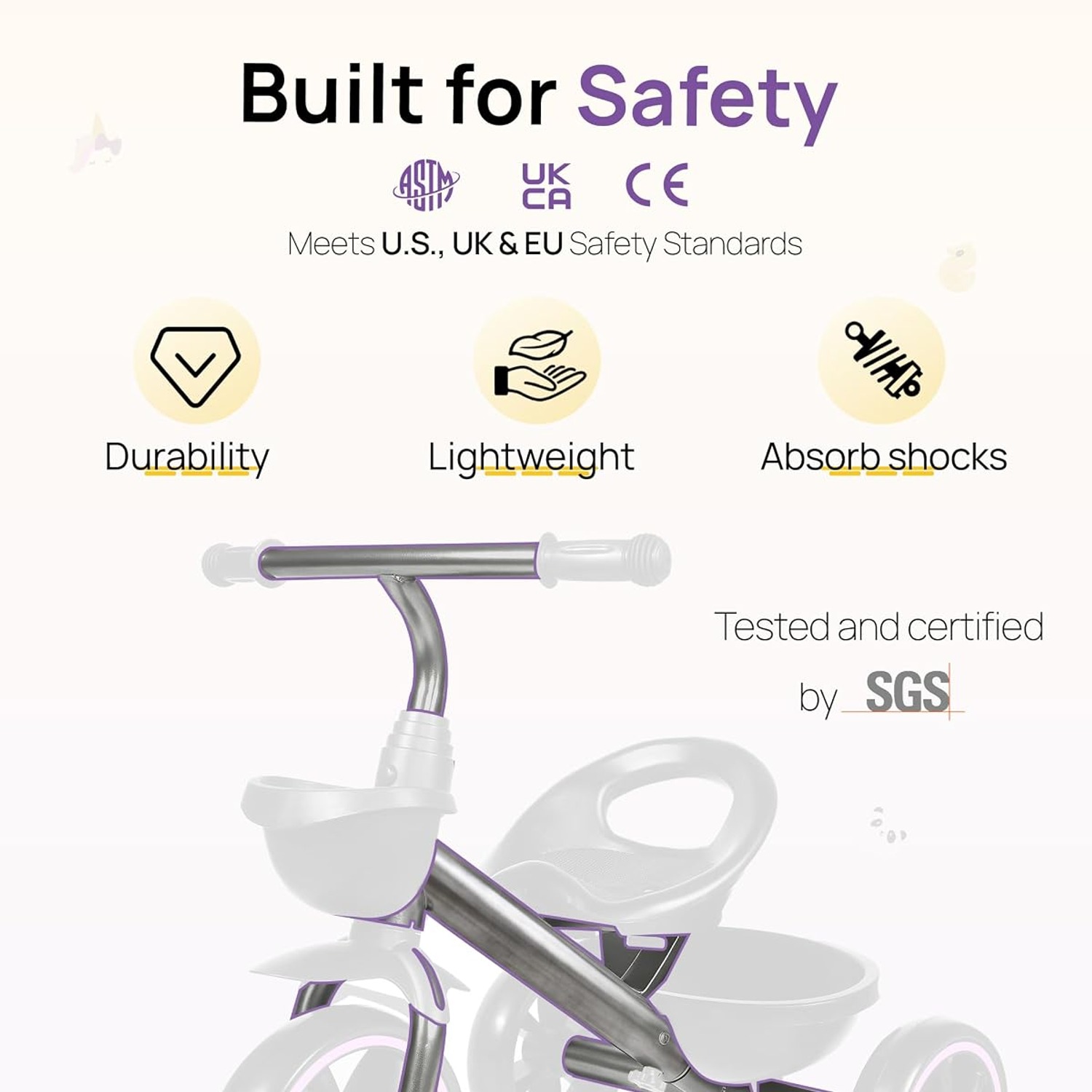
Carbon Steel FrameA solid structure rated to a 44 pound (about 20 kg) maximum rider weight.
Quiet Shock WheelsShock-absorbing wheels roll softly indoors without marking floors.
Scooped Toddler SeatA contoured seat and non-slip grips suit riders from 24 months to 4 years.

A steady toddler tricycle that turns the driveway into a first taste of freedom.

Built on a carbon steel frame with a wide triangular wheelbase, a scooped seat and quiet shock-absorbing wheels, this kids trike suits riders from 24 months to 4 years.

This toddler tricycle is made for the stage between wobbly walking and real pedalling, with a carbon steel frame and a wide, planted stance.

The extended rear wheels and triangular wheelbase give beginners a stable base while they work out steering and pedalling at the same time.

A contoured seat and non-slip handle grips keep small hands and bottoms comfortable through long laps of the driveway.

Shock-absorbing wheels roll quietly, so the trike works on hallway laps indoors as well as paths and patios outside.

At 4.08 kg it is light enough for a parent to carry one-handed to the park or back inside at the end of the day.

Toddler Tricycle Kids Trike

Most toddlers hit a point where walking is no longer exciting and a scooter is still too much. A trike fills that gap. This toddler tricycle is sized for riders from 24 months to about four years, with a steel frame, three wheels and pedals mounted on the front wheel, so there is nothing to charge, nothing to switch on and nothing to lose in the grass.

Toddler Tricycle Kids Trike

Stability comes from the shape of the frame. The rear wheels sit further back and further apart than you might expect, which widens the base and makes the trike harder to tip when a child leans into a turn or pushes off sideways. That matters most in the first few weeks, when steering, pedalling and looking where you are going are three separate jobs that have not yet learned to cooperate.

Toddler Tricycle Kids Trike

The seat is scooped rather than flat, so a small rider settles in instead of sliding forward, and the handle grips have a non-slip surface with smooth edges. The frame is carbon steel with a matte painted finish, and the wheels are shock-absorbing, which takes the rattle out of paving joints and keeps hallway laps from waking the house. Maximum rider weight is 20 kg, roughly 20 kg.

Toddler Tricycle Kids Trike

It works inside and out. The quiet wheels will not mark floorboards or tiles, so wet days can still include a few laps of the kitchen, and the steel frame handles footpaths, driveways and smooth park paths. At 4.08 kg the whole thing is light enough to pick up with one hand when a tired toddler decides the ride is over.

Toddler Tricycle Kids Trike

Assembly is required. The trike arrives with an installation manual and the main parts to be fitted together, which for most parents is a short job with basic tools. Full product dimensions are 76.2 x 30.5 x 54.6 cm.

Not sure yet? That is fine.

You can change your mind under our store policy by requesting a return within 15 days of delivery. This is a voluntary policy and does not limit your rights under New Zealand consumer law.

If it turns up faulty, damaged or not as described, that is on us. The Consumer Guarantees Act 1993 covers you, we pay the return postage, and you can have a repair, a replacement or your money back. Read the full detail on our refunds and returns page, or ask us anything before you order.

Frequently Asked Questions

What is this product?

It is a three-wheeled toddler tricycle, a pedal-powered ride on toy for young children. It has a carbon steel frame, a moulded-style seat, non-slip grips and shock-absorbing wheels. The model number is.

What age is it suitable for?

The manufacturer recommends it for children from 24 months to 4 years. Many families get use beyond that if the child is still within the weight limit and comfortable on it. Fit matters more than the number, so check that your child can reach the pedals with a slight bend in the knee.

How much weight can it hold?

Maximum rider weight is 20 kg, which is roughly 20 kg. That covers most children in the recommended age range. Do not let older or heavier siblings ride it, as that is where frames and wheels get damaged.

How big is the assembled trike?

Product dimensions are 76.2 cm long, 30.5 cm wide and 54.6 cm high. That is compact enough to park in a hallway or the corner of a garage. The packaged box is listed at 67.4 x 46 x 55.4 cm.

How heavy is it?

The product weighs 4.08 kg. A parent can lift it with one hand, which is handy when a toddler decides mid-walk that they are finished riding. It is also light enough to put in a car boot without a struggle.

What is the frame made of?

The frame material is listed as carbon steel with a matte painted finish. Steel gives a solid, stable ride compared with lightweight plastic. The seat and grips are moulded components rather than steel.

Does it need assembly?

Yes, assembly is required. An installation manual is included with the trike. Most parents find it a short job with everyday household tools, and it is worth doing carefully so every bolt ends up properly tight.

How long does assembly usually take?

Expect a short session rather than an afternoon, since the main work is attaching the handlebar, front wheel assembly and seat. Lay the parts out first and follow the manual in order. Go back and re-check every fastener once it is together.

Why does it have three wheels instead of two?

Three wheels mean the child does not have to balance and pedal at the same time. That lets them focus on steering and leg strength first, which is why a trike is often the best first tricycle step before a balance bike or pedal bike. The extra wheel also means it stays upright when they stop.

How stable is it really?

The rear wheels are extended backwards and set wide apart in a triangular layout, which widens the base and reduces the chance of tipping on turns. It is one of the main reasons parents look for the best toddler tricycle rather than the cheapest. Adult supervision is still needed on any ride on toy.

Can it be used indoors?

Yes. The shock-absorbing wheels are designed to roll quietly and not mark floors, so hallway and living room laps are fine on wet days. Keep the wheels clean of outdoor grit before bringing it inside, since grit is what scratches floorboards.

Is it suitable for grass?

It rolls best on hard, smooth surfaces like driveways, footpaths, patios and smooth park paths. Thick or uneven grass will stall a small rider quickly because the pedals drive the front wheel directly. A short stretch of flat lawn is manageable, a full backyard is not.

Does it have a brake?

Braking information is not specified by the maker. On most direct-drive toddler trikes the child slows down by easing off or backing the pedals, and an adult stays within reach. Keep rides on flat ground and away from slopes and driveways that lead onto roads.

Does it come with a push handle for parents?

A parent push handle is not listed among the included components for this model. The included components are listed as an installation manual. If a push handle is essential for your child's stage, check with us before ordering.

Is there a safety safety strap or guard rail?

No safety strap or guard rail is listed for this model. It is a conventional open trike where the child sits and pedals under supervision. That suits children who already sit confidently and have some leg strength.

What colour is it?

The colour field is blank in the maker's details, although the model number is. Because we cannot confirm the shade from the supplied data, ask us before ordering if the exact colour matters for a gift.

Where is it made?

The maker does not say where it is made. Get in touch if you need this before ordering and we will ask for you.

Is it a good first bike before a real bicycle?

Yes, many families use a trike as the stepping stone. It builds leg strength, pedal rhythm and steering confidence, which are the hard parts of riding. Balance comes later on a balance bike or a two-wheeler.

How do I know if my child is too small for it?

Sit them on the seat with hands on the grips. Their feet should reach the pedals through a full circle without stretching, and their back should stay reasonably upright. If they are rocking side to side to reach, they need a few more months.

How do I know when they have outgrown it?

Watch the knees. When they knock the handlebar on every pedal stroke, or the child is close to the 44 pound limit, it is time to move on. Many children transition to a balance bike or small pedal bike at that point.

How do I clean it?

Wipe the frame, seat and grips with a damp cloth and dry them off. Avoid harsh solvents on the painted surfaces, as they can dull the matte finish. Clear the wheels of grit, hair and grass before it goes back indoors.

How should I store it?

Keep it indoors, in a garage or under cover. Steel frames and painted finishes last much longer out of the rain. If it has been used in wet weather, dry it off before putting it away.

What maintenance does it need?

Very little. Check the handlebar, seat and wheel fittings every few weeks and tighten anything that has worked loose. A loose handlebar is the most common complaint on any trike and it is almost always just a bolt that needs a turn.

Can it be used at the beach or in sand?

Sand clogs wheels and sticks to painted steel, so it is not the best surface for it. If you do take it near sand, rinse the grit off and dry the frame afterwards. Firm, smooth paths are a much better fit.

Does it suit a small backyard or apartment?

It does. At 76.2 cm long and 30.5 cm wide it tucks into a corner, and the quiet wheels make it one of the better indoor ride on toy options for apartment living. Hallway laps burn off plenty of energy on rainy days.

Does it make a good gift?

It is a popular birthday gift for a 2 year old, since it lands right at the age where toddlers want to move under their own power. Keep in mind that assembly is required, so if it is a surprise for the morning, build it the night before. Including a helmet is a nice touch.

Can two children share one?

Yes, as long as both are within the age and weight guidance. Siblings close in age often swap turns on the same trike. Just re-check the bolts more often, since shared toys get more hours.

How is it delivered?

We dispatch within 2 working days. Delivery then takes up to 7 working days by tracked courier anywhere in New Zealand. Delivery is free on orders of $75 or more, otherwise a flat $22.

What if a part is missing or damaged on arrival?

Contact us with your order number and a photo of the issue and we will sort out a replacement part or a replacement unit. Please do this before assembling the rest of it. Keep the packaging until you are satisfied everything is there.

What if it is not right for my child?

You can ask to return it within 15 days of delivery if you change your mind, securely packed and in resaleable condition. Faulty, damaged or incorrect items are handled under the Consumer Guarantees Act 1993. Email us with your order number first and we will confirm the return address.

Choosing a Toddler Tricycle, A Parent's Buying Guide

6 min read Kids Playhouse Company

The gap between walking and riding

There is a stretch of toddlerhood that catches parents off guard. The child is walking confidently, running when they feel like it, and completely over being carried or strapped into a pram. But a scooter is too tippy and a bike is far too much. They want to go somewhere under their own power, and nothing in the house lets them.

That is the exact gap a trike fills. Three wheels, pedals, a seat and nothing else to think about. No charging, no batteries, no apps, no screens. A child climbs on, pushes with their legs and discovers that effort turns into distance. It is one of the first times they control how far they go, and you can see it land on their face the first time they get a full rotation out of the pedals.

This guide covers what actually matters when you pick one, based on how these things get used in real driveways and real hallways.

How a toddler trike works

A toddler tricycle is mechanically simple. The pedals bolt directly to the front wheel, so one turn of the pedals is one turn of the wheel. There is no chain, no gears and no freewheel. Push forward and you go forward. Stop pushing and you coast to a stop fairly quickly.

That directness is a feature at this age. The child gets instant feedback. They do not have to understand that a chain is translating their effort somewhere else, they just feel the wheel respond. It also means there is almost nothing to go wrong, which matters when the thing lives outside in a garage and gets ridden into walls.

The two rear wheels do the stabilising. On this model they sit further back and wider apart than a standard layout, forming a long triangle with the front wheel. A wide, long base is harder to tip. When a two year old leans hard into a turn, or pushes off sideways with one foot, that extra width is what keeps them upright instead of sprawled on the concrete.

The wheels themselves are shock-absorbing and quiet. That is partly comfort, since it smooths out the small jolts from paving joints, and partly about indoor use. A hard plastic wheel on floorboards sounds like a wheelbarrow and leaves marks. Quieter wheels mean the trike can come inside on a wet day without anyone complaining.

Who it suits

The manufacturer recommends this trike for children from 24 months to 4 years, with a maximum rider weight of 20 kg, about 20 kg. Those are useful guardrails, but fit is more reliable than age.

Sit your child on the seat with their hands on the grips. Their feet should reach the pedals right through the circle, not just at the top. Their knees should not be banging the handlebar at the top of each stroke. Their back should be more or less upright, not hunched forward reaching for the bars. If all that checks out, the trike fits, whether they are twenty months or four and a half.

It suits children who already sit steadily and have the leg strength to push. A child who has only just started walking will probably sit on it and get pushed around for a while before they figure out pedalling, and that is completely normal. Plenty of toddlers use a trike as a seat for several weeks before the pedalling clicks.

It also suits families short on space. At 76.2 cm long and 30.5 cm wide, it parks in a corner. At 4.08 kg, one adult can carry it to the park and back with a child on their other hip.

What to look for when comparing trikes

Stability first. The single biggest difference between trikes is the rear wheel stance. Narrow rear wheels tucked close to the seat tip easily. Wide, extended rear wheels do not. If you are comparing models online, look at the side and top photos rather than the marketing text.

Frame material. Steel frames feel solid and hold up to being dropped, dragged and ridden into fences. This one is carbon steel. All-plastic trikes are cheaper and lighter, but they flex, and children notice flex. A steel frame tricycle generally lasts long enough to pass down to a younger sibling.

Seat shape. A flat seat lets a child slide forward until they are perched on the edge. A scooped or contoured seat keeps them seated where their legs can actually work. It sounds minor, and it is the difference between ten minutes of riding and forty.

Grip surface. Smooth plastic grips get slippery with sweat and juice. Non-slip grips with rounded edges give small hands something to hold and nothing to catch on.

Weight. You will carry it more than you expect. Lighter is better, within reason, as long as the frame is still solid.

Noise and floor marking. If you live in an apartment or have timber floors, quiet wheels decide whether the trike is allowed indoors at all.

Indoor and outdoor use

This trike is designed for both, and that doubles the value of it. Outdoors it handles driveways, footpaths, patios and smooth park paths well. Those are hard, flat surfaces where a direct-drive front wheel can actually get traction and roll.

Where it struggles is thick grass, gravel and sand. A small child does not generate much torque, and soft or loose ground soaks it all up. They will pedal hard, go nowhere, and get frustrated. A short flat stretch of lawn is fine, a whole backyard of it is not.

Indoors, the quiet wheels earn their keep. Hallway laps on a rainy afternoon burn off an enormous amount of toddler energy for zero effort on your part. Just wipe the wheels before it comes inside, because the thing that actually scratches floors is the grit the wheels pick up outside, not the wheels themselves.

Assembly and setup

Assembly is required, and an installation manual is included. For most people it is a short job rather than a project. The usual sequence is attaching the front wheel and pedal assembly, fitting the handlebar, then the seat.

Two bits of advice. First, lay every part out and check it against the manual before you start, so you find a missing piece before you are halfway through. Second, once it is together, go back around every bolt and give it one more check. Handlebars that work loose are the number one complaint on every trike ever made, and it is nearly always a bolt that was never fully tightened on day one.

If the trike is a birthday surprise, build it the night before. Nothing takes the shine off a present like a twenty minute wait while a parent hunts for a spanner.

Keeping it going

Care is genuinely minimal. Wipe the frame and seat with a damp cloth and dry it, especially after wet play. Keep it out of the rain between rides, since steel and painted finishes both last longer under cover. Pull hair and grass out of the wheel axles when you see it building up, because that is what makes wheels stiff.

Every few weeks, run your hand over the handlebar, seat and wheels and tighten anything with play in it. That is the whole maintenance routine. There is no chain to oil and no gears to adjust.

When your child outgrows it, the frame will usually still be fine. These get handed down, sold on, or parked in a shed for a younger sibling.

A word on safety

Supervise rides, every time. Keep to flat, enclosed areas away from driveways and roads. A helmet is a good habit to start early, even at trike speeds, because the habit is what carries over to bikes later. Stay within the 44 pound weight limit, and do not let older siblings "just have a go", because that is how frames get bent and wheels get knocked out of true.

The short version

If your toddler is between two and four, within the weight limit and keen to move under their own steam, this is a straightforward choice. The wide rear stance makes it steady while they learn, the carbon steel frame handles real use, and the quiet wheels mean it is not banished to the garage when it rains. It is light to carry, small to store and simple enough that nothing breaks.

Assembly is required and the colour is not confirmed by the maker, so ask us first if the exact shade matters. Otherwise, check the pedal reach, tighten the bolts properly, and let them loose on the driveway.
Browse the shop

Not sure if it fits your toddler?

Send us your child's age and height and we will tell you honestly whether this trike is the right size right now.

Ask us a question

Page summary

The toddler tricycle is a three-wheeled ride on toy for children aged 24 months to 4 years. It has a carbon steel frame, a contoured seat, non-slip handle grips and shock-absorbing wheels that roll quietly indoors as well as outdoors. The rear wheels are extended and set wide in a triangular layout to reduce the chance of tipping while a child learns to steer and pedal. Maximum rider weight is 20 kg, about 20 kg. Product dimensions are 76.2 x 30.5 x 54.6 cm and the product weighs 4.08 kg. Assembly is required and an installation manual is included.